Page Description
Explore ‘Broken Justice,’ an in-depth look at the flaws and challenges within the legal system and the quest for true justice.
Justice is meant to be the cornerstone of a fair and functioning society, where truth prevails and the innocent are protected. However, when the system that is supposed to uphold justice falters, it leads to disastrous consequences—wrongful convictions, systemic bias, and a broken trust in the very institutions designed to protect us. This page examines the profound failures of justice, from the innocent victims of miscarriages of justice to the institutional forces that perpetuate them, and asks: How can we fix what’s broken?
Gebroken Rechtvaardigheid
Rechtvaardigheid zou de hoeksteen moeten zijn van een eerlijke en goed functionerende samenleving, waar de waarheid zegeviert en de onschuldigen worden beschermd. Maar wanneer het systeem dat de rechtvaardigheid zou moeten handhaven faalt, leidt dit tot desastreuze gevolgen—onterechte veroordelingen, systematische vooroordelen en een gebroken vertrouwen in de instellingen die ons zouden moeten beschermen. Deze pagina onderzoekt de diepgaande tekortkomingen van de rechtvaardigheid, van de onschuldige slachtoffers van gerechtelijke dwalingen tot de institutionele krachten die deze in stand houden, en vraagt: Hoe kunnen we herstellen wat gebroken is?
Introduction
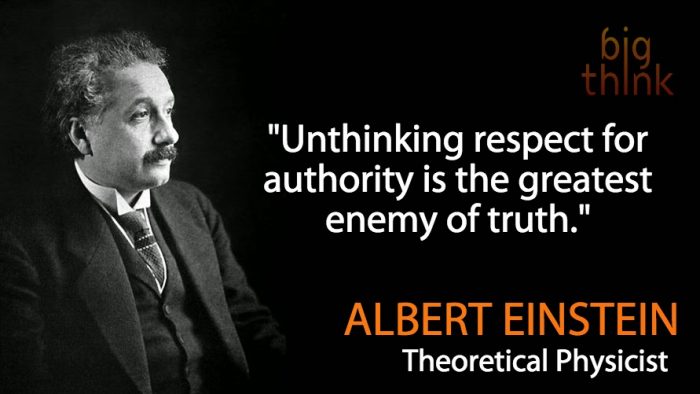
When someone places authority above conscience, you get arbitrariness, like Diederik Stapel choosing the wrong path and turning his head, bit by bit, to his own advantage, only to end up with a fatal accident” (Part 2 of this website).
It happens that one is mistaken about someone and that one does not expect such a thing from a certain person.
A judge has a mandate from society, is appointed for a service to society, to form an idea about what is put before him.
He is like a scientist, who presents findings in the form of a study.
If he does not know all the facts, he may be mistaken.
The assumption, the perception that a judge is careful and makes sometimes tearing considerations for himself in all integrity, on how to deal with an issue, this is not always the reality.
In a video by Harvard professor Garry Gray Trust in research – the ethics of knowledge production – we note that a scientist is a human being and can make ‘compromises’ and is not necessarily ‘independent’.
The possibility exists that we end up with an erroneous representation of findings, influenced among other things by environmental factors (explained on the webpage Herald of Free Enterprise 1987).
The moral compass, guided by inspiration, is a look at what uplifts and moves a person in spirit. One has good intentions towards a person, who is put in difficulty, for example
on the basis of characteristics attributed to him, which are clearly not there,
i.e. a false accusation and so on.
If something is not right there are always clues. Then one can say this is strange. One can start thinking, to come to the right conclusion. This is the intention.
King Solomon is a metaphor of a righteous judge who does not allow himself to be misled by people who are on opposite sides and who do know what the reality is, but present a wrong picture.
For example, in a former Verwilgen commission, the chairman said to two people who were sitting in front of him and who said the opposite: “one of you is not telling the truth”. This was very clear.
If what should be done is not done, we get meaningless justice. So what is the meaning of justice?
When justice fails, as a result of its misuse, the way it is used, it is at odds with society, it is at odds with the reality of life. Unreliable justice is unlivable. This kind of alienation from justice has no meaning. It is arbitrary.
It is horrifying, shocking that it is possible for the justice system to lose its balance, to dislocate, crumble and be disrupted, and for people who are beyond reproach to suddenly disappear into prison. When their lives are broken, it is established: it is the wrong person.
A single element can cause a domino and your life is over,
without reason, trigger or cause.
The menu item Baffling contains a library of more than 30 web pages, hundreds of cases where the justice system has gone stupidly off the rails with existential consequences.
The loopholes, the traps, the backdoors to break the balance, to disrupt justice.
In other words, we have the monster of keeping up appearances, completely incongruous and pointless.
People of good character who cannot face justice are crushed, a burden on society. This is inadmissible. Even absolutely inadmissible.
Why are standard-bearers in the judiciary and in society too reticent to acknowledge in all honesty that there may be hiccups in such an event, and to faithfully follow the dialogue of engagement, saying ‘problems are there to be solved’. Fair is fair.
Sometimes those responsible have no choice but to conclude: the judiciary did not do its best, the entities relied upon did not pay attention, despite clarity being evident, but they did not take it into account.
Sometimes a matter is very simple and yet, for many reasons, the justice system makes a complete mistake.
For example, if justice can so easily be lured into a trap, into a fact unknown to justice, justice can be totally wrong.
The basic question that everyone can always ask themselves (especially if it is important) is: is there anything unclear?
A made-up story or a construction can get people in trouble, because people with a good character then come into contact with the justice system for no reason or no touch point, and that is where things can go wrong.
The basis in life is that a person in trouble – especially when the trouble is incongruous and could not occur – that you have to be able to talk to someone in those circumstances.
This is the weakest point.
It creates a false negative spiral. Even to the extent of blocking the course of justice.
Justice becomes abjectly destructive, without reason or cause, despite tangible, visible data, contrary to the responsibility attached to justice, and the abject wrong is not stopped despite this.
In precarious circumstances, it is sometimes the case that a person in a weak position cannot talk to someone in confidence, because the necessary action would be taken.
Wanneer iemand autoriteit boven het geweten plaatst, verkrijg je willekeur, zoals Diederik Stapel ‘het verkeerde pad kiest en zichzelf stukje bij beetje een rad voor ogen draait om uiteindelijk keihard te verongelukken’ (Deel 2 van deze website).
Het gebeurt dat men zich vergist in iemand en dat men zoiets niet verwacht van een bepaalde persoon.
Een rechter heeft een mandaat van de samenleving, wordt aangesteld voor een dienst aan de samenleving, om zich een idee te vormen over wat hem wordt voorgelegd.
Hij is zoals een wetenschapper, die bevindingen weergeeft in de vorm van een studie.
Indien hij niet alle feiten kent kan hij zich vergissen.
De veronderstelling, de perceptie dat een rechter zorgvuldig te werk gaat en voor zichzelf in alle integriteit soms verscheurende overwegingen maakt, nopens hoe hij omgaat met een kwestie, dit is niet altijd de werkelijkheid.
In een video van Harvard professor Garry Gray Trust in research – the ethics of knowledge production – stellen we vast dat een wetenschapper een mens is en ‘compromises’ kan maken en niet noodzakelijk ‘independent’ is.
De mogelijkheid bestaat dat we terechtkomen in een foute weergave van vaststellingen, beïnvloed o.a. door omgevingsfactoren (toegelicht op de webpagina Herald of Free Enterprise 1987).
Het moreel kompas, geleidt door inspiratie, een opkijken naar wat een mens verheft en in gemoede beroert. Men heeft het goed voor met een mens, die in moeilijkheden wordt gebracht, voorbeeld
op basis van kenmerken die hem worden toegedicht, die er in alle duidelijkheid niet zijn,
d.i. o.a. een valse beschuldiging enzovoort.
Als er iets niet klopt zijn er altijd aanwijzingen. Dan kan men zeggen dit is vreemd. Men kan beginnen na te denken, om tot een juiste conclusie te komen. Dit is de bedoeling.
Koning Salomon is een metafoor van een rechtvaardige rechter die zich niet laat misleiden door mensen die tegenover elkaar staan en wel weten wat de werkelijkheid is, doch een verkeerd beeld voorleggen.
Voorbeeld, in een vroegere commissie Verwilgen zei de voorzitter aan twee mensen die voor hem zaten en het tegenoverstelde beweerden: “één van jullie spreekt niet de waarheid”. Dit was heel duidelijk.
Als er niet gebeurt wat hoort gedaan te worden krijgen we zinloze justitie Wat is dan de betekenis van justitie?
Als Justitie hapert, als gevolg het fout gebruik ervan, de manier waarop, staat het haaks op de samenleving, is het in strijd met de werkelijkheid van het leven. Onbetrouwbare justitie is onleefbaar. Zo’n soort vervreemding van justitie heeft geen betekenis. Het is willekeur.
Het is huiveringwekkend, schokkend dat het kan dat justitie zijn evenwicht verliest, ontregelt, afbrokkelt en ontwricht wordt en dat mensen waarop niets aan te merken valt, plots in de gevangenis verdwijnen. Wanneer hun leven gebroken is, wordt er vastgesteld: het is de verkeerde persoon.
Een enkel element kan een domino veroorzaken en je leven is afgelopen,
zonder reden, aanleiding of oorzaak.
Het menu-item Baffling bevat een bibliotheek met meer dan 30 webpagina’s, honderden cases waar justitie domweg uit de bocht is gegaan met de existentiële gevolgen van dien.
De loopholes, de valkuilen, de achterpoortjes om het evenwicht te verbreken, om justitie te ontwrichten.
M.a.w. we hebben het monster van de schone schijn, compleet ongerijmd en zinloos.
Mensen met een goed karakter die niet kunnen in aanraking komen met justitie worden verbrijzelt, wat een last is voor de samenleving. Zoiets is ontoelaatbaar. Zelfs absoluut ontoelaatbaar.
Waarom zijn vaandeldragers bij justitie en in de samenleving te beroert om in zo’n gebeuren in eerlijkheid te erkennen dat er zich haperingen kunnen voordoen en de dialoog van het engagement getrouw, zeggen ‘problemen zijn er om op te lossen’. Eerlijk is eerlijk.
Soms kunnen verantwoordelijken niet anders dan vaststellen: justitie heeft zijn best niet gedaan, de entiteiten waarop men vertrouwde hebben niet opgelet, ondanks duidelijkheid manifest aanwezig was, doch men heeft er geen rekening mee gehouden.
Soms is een kwestie erg eenvoudig en toch, door tal van redenen, vergist justitie zich compleet.
Voorbeeld als zo makkelijk justitie in de val kan gelokt worden, in een gegeven die justitie niet kent, kan justitie totaal verkeerd oordelen.
De basisvraag die iedereen zich altijd kan stellen (in het bijzonder indien het belangrijk is) is: is er iets onduidelijk?’
Een verzonnen verhaal of een constructie kan mensen in moeilijkheden brengen, doordat mensen met een goed karakter dan zonder reden of enig raakpunt in aanraking komen met justitie én daar kan het verkeerd aflopen.
De basis in het leven is, dat een mens in moeilijkheden – in het bijzonder wanneer de moeilijkheden ongerijmd zijn en dus zich niet konden voordoen – dat je in die omstandigheden met iemand moet kunnen spreken.
Dit is het zwakste punt.
Er ontstaat een foute negatieve spiraal. Zelfs in die mate dat de rechtsgang geblokkeerd wordt.
Justitie wordt abject destructief, zonder reden aanleiding of oorzaak, ondanks tastbare, zichtbare gegevens, in strijd met de verantwoordelijkheid die verbonden is aan justitie en het abject fout gebeuren wordt des ondanks niet gestopt.
In precaire omstandigheden is het soms zo, dat een mens in een zwakke positie niet met iemand in vertrouwen kan praten, omdat het nodige zou gedaan worden.
The fallout and impact of the Epstein files | BBC News
6 feb 2026 #JeffreyEpstein #EpsteinFiles #BBCNews
The list of some of the world’s most rich and powerful people with ties to late sex offender Jeffrey Epstein has lengthened, after the US government released millions of new files from its investigation into the disgraced financier.
The latest drop of material on 30 January included three million pages, 180,000 images, 2,000 videos, and a number of household names like Richard Branson, Bill Gates and Elon Musk.
There is no suggestion that appearing in the documents implies any wrongdoing. Many people who have featured in previous releases have denied any wrongdoing in relation to Epstein.
Here is what we know so far and about the seismic impact they have had.
Unthinking
adjective formal mainly disapproving
Not based on serious thought or an examination of the information:
What annoys me about these people is their unthinking hostility to anything foreign or unfamiliar.
Cambridge Dictionary 
When the System Breaks: A Lighthearted Prank with a Serious Undertone

Mom Needs Break from her Kid Prank!
In this candid camera prank, a mother is playfully overwhelmed by her child’s antics, creating a chaotic but harmless scenario. However, when the police are called to intervene, they seem to turn a blind eye to the underlying situation. Rather than addressing the child’s disruptive behavior or offering any constructive help, the officers dismiss the scene as just a harmless joke. This moment captures a larger issue of negligence—when authorities fail to recognize or act upon serious situations, leading to missed opportunities for intervention and support. The video highlights how, in real-life cases, ignoring the root cause can have consequences, reflecting a broader societal issue where the police or justice system may not always provide the response needed to truly protect individuals in distress.
Mama Heeft Even Pauze van Haar Kind!
In deze candid camera-prank wordt een moeder op speelse wijze overmand door de streken van haar kind, wat een chaotische maar onschuldige situatie creëert. Wanneer de politie wordt gebeld om in te grijpen, lijken zij echter de ernst van de situatie niet te herkennen. In plaats van het gedrag van het kind aan te pakken of constructieve hulp te bieden, negeren de agenten de scène als een onschuldige grap. Dit moment benadrukt een groter probleem van nalatigheid—wanneer autoriteiten niet in staat zijn om de onderliggende situatie te erkennen of erop te reageren, waardoor kansen voor interventie en steun gemist worden. De video benadrukt hoe het negeren van de oorzaak in echte gevallen gevolgen kan hebben, en weerspiegelt een breder maatschappelijk probleem waarin de politie of het rechtssysteem niet altijd de benodigde reactie biedt om individuen in nood daadwerkelijk te beschermen.