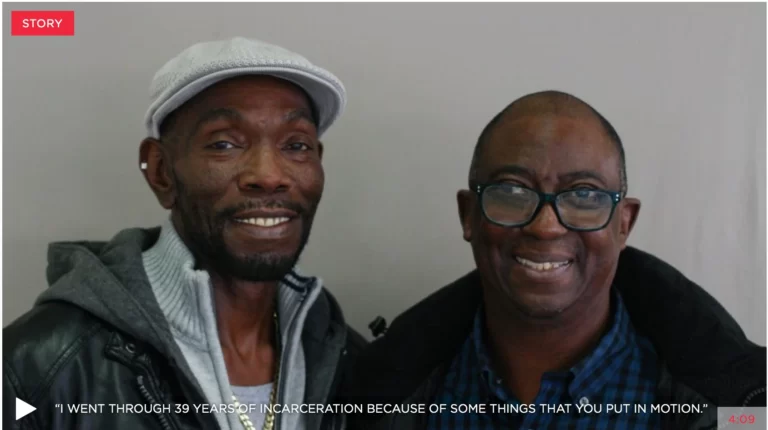
Ik heb 39 jaar gevangenschap doorstaan vanwege sommige dingen die jij in gang hebt gezet.
Page Description
Wrongfully imprisoned for nearly 40 years, Rickey Jackson’s story reveals how false testimony and police misconduct destroyed an innocent man’s life.

“De rechercheur zei dat ik te jong was om naar de gevangenis te gaan, maar dat hij mijn ouders zou arresteren voor meineed omdat ik me terugtrok. Mijn moeder was op dat moment ziek en dat maakte me erg bang. Ik wilde niet dat mijn ouders hierdoor in de problemen zouden komen.”
At just 18 years old, Rickey Jackson was sentenced to life in prison — based not on hard evidence, but on the coerced testimony of a 12-year-old boy.
There was no physical evidence, no murder weapon, and no clear motive — only circumstantial claims and a frightened child pressured by police. That child was Eddie Vernon, who later suffered deeply from the weight of his false testimony. Years later, while seriously ill in hospital, Eddie confided in a pastor: he had lied.
This revelation opened the door to Rickey’s eventual exoneration — after nearly 40 years of wrongful imprisonment.
On this page, we share the powerful story of Rickey Jackson and the emotional moment he met the man whose words once condemned him.
Op slechts 18-jarige leeftijd werd Rickey Jackson veroordeeld tot een levenslange gevangenisstraf — niet op basis van hard bewijs, maar op de afgedwongen getuigenis van een 12-jarige jongen.
Er was geen fysiek bewijs, geen moordwapen, geen duidelijk motief — alleen indirecte aanwijzingen en een kind dat onder druk van de politie een valse verklaring aflegde. Die jongen was Eddie Vernon, die later zwaar zou lijden onder het gewicht van zijn woorden.
Jaren later, terwijl hij ernstig ziek in het ziekenhuis lag, vertrouwde Eddie een dominee toe dat hij had gelogen.
Die bekentenis opende de deur naar Rickey’s uiteindelijke vrijspraak — na bijna 40 jaar onterechte opsluiting.
Op deze pagina delen we het aangrijpende verhaal van Rickey Jackson en het emotionele moment waarop hij de man ontmoette die hem ooit had beschuldigd.
The Depths of Our Justice System: A Critical Look at Wrongful Convictions
A Deeper Look into our Justice System | Mark Godsey | TEDxUCincinnati
22 mei 2017
Mark Godsey has dedicated his legal career to protecting convicted inmates who claim they are not guilty. But how do those innocent citizens end up with convictions in the first place? Mark Godsey presents why that happens and how can we minimize—or even eliminate—the high number of wrongful convictions that happen in the United States each year.
Professor Mark Godsey directs the Ohio Innocence Project at the University of Cincinnati College of Law, and is a leading activist globally in the innocence movement. He is the author of Blind Injustice: A Former Prosecutor Exposes the the Psychology and Politics of Wrongful Convictions, forthcoming September 2017.
In this TEDx talk, A Deeper Look into our Justice System, Mark Godsey, a former prosecutor and law professor, examines the flaws and biases within the criminal justice system. Drawing on his experience and research, Godsey sheds light on the systemic issues that lead to wrongful convictions and the deep impact they have on individuals and society. He advocates for reform, emphasizing the importance of truth and fairness in legal proceedings. Through his insights, he encourages viewers to reconsider how justice is served and calls for a more transparent and compassionate system.
De Diepte van ons Rechtssysteem: Een Kritische Blik op Onterechte Veroordelingen
In deze TEDx-talk, A Deeper Look into our Justice System, onderzoekt Mark Godsey, een voormalig aanklager en professor in de rechten, de tekortkomingen en vooroordelen binnen het strafrechtssysteem. Gebaseerd op zijn ervaring en onderzoek, werpt Godsey licht op de systematische problemen die leiden tot onterechte veroordelingen en de diepe impact die deze hebben op individuen en de samenleving. Hij pleit voor hervorming en benadrukt het belang van waarheid en rechtvaardigheid in juridische procedures. Door middel van zijn inzichten moedigt hij de kijkers aan om het rechtssysteem in een nieuw licht te zien en roept hij op tot een transparanter en meer empathisch systeem..
A Story of Injustice, Redemption — and Remarkable Courage
On May 19, 1975, a tragic robbery at a Cleveland grocery store ended in the murder of shopkeeper Harold Franks. What followed was a devastating miscarriage of justice.
Eighteen-year-old Rickey Jackson, who had nothing to do with the crime, was arrested and convicted—based solely on the testimony of a 12-year-old boy named Eddie Vernon. That boy had been pressured by police, overwhelmed by fear, and unaware of the weight his words would carry.
Rickey spent nearly four decades in prison for a crime he didn’t commit.
Years later, Eddie found the strength to come forward and admit the truth: Rickey was innocent. His courageous reversal paved the way for Rickey’s exoneration.
In this powerful StoryCorps conversation, Rickey and Eddie meet face-to-face to speak openly — not just about the past, but about the possibilities of healing, forgiveness, and what it means to reclaim a life taken by injustice.
This is more than a story of wrongful conviction — it’s a story of humanity, accountability, and the long road to truth.
What follows is the moment Rickey met Eddie — the man whose false words took his freedom. It is a meeting filled with emotion, pain, and a glimpse of something rarely seen in stories like this: the fragile beginning of truth and reconciliation.
🎥 Watch their extraordinary conversation.
Rickey’s case, like that of John Bunn, shows the brutal absurdity of police misconduct. A young man, completely innocent and with no connection to the crime, was torn from his life and locked away for decades — simply because someone needed to be blamed. These aren’t rare mistakes. They are catastrophic failures of justice, rooted in corruption and indifference.
It’s easy to say, “he was wrongly imprisoned for 38 years.”
But the truth is harder to grasp: the depth of anger, loss, and emotional devastation. Rickey spent his entire adult life behind bars. Eddie, too, suffered — haunted by guilt, depression, and the lifelong impact of being used by a system that cared more about a conviction than the truth.
Een verhaal over onrecht, verlossing — en opmerkelijke moed
Op 19 mei 1975 eindigde een gewapende overval op een kleine kruidenierswinkel in Cleveland in de tragische dood van winkelier Harold Franks. Wat daarna volgde, was een diepgaande gerechtelijke dwaling.
De 18-jarige Rickey Jackson, die niets met de misdaad te maken had, werd gearresteerd en veroordeeld — uitsluitend op basis van de getuigenis van een 12-jarige jongen: Eddie Vernon. Eddie stond onder grote druk van de politie, was bang, en had geen idee van de gevolgen van zijn woorden.
Rickey bracht bijna veertig jaar in de gevangenis door voor een misdaad die hij niet had gepleegd.
Jaren later vond Eddie de moed om de waarheid te vertellen: Rickey was onschuldig. Dankzij zijn eerlijke bekentenis kon Rickey uiteindelijk worden vrijgesproken.
In dit aangrijpende gesprek van StoryCorps komen Rickey en Eddie oog in oog met elkaar te staan. Ze praten openhartig — niet alleen over het verleden, maar ook over heling, vergeving, en wat het betekent om een gestolen leven terug te winnen.
Dit is meer dan een verhaal over een onterechte veroordeling — het is een verhaal over menselijkheid, verantwoordelijkheid en de lange weg naar de waarheid.
Wat volgt is het moment waarop Rickey Eddie ontmoet — de man wiens valse woorden hem zijn vrijheid ontnamen. Het is een ontmoeting vol emotie, pijn, en een glimp van iets wat zelden voorkomt in dit soort verhalen: het kwetsbare begin van waarheid en verzoening.
🎥 Bekijk hun buitengewone ontmoeting.
Rickey’s zaak, net als die van John Bunn, toont de brute absurditeit van wangedrag door de politie. Een jonge man, volledig onschuldig en zonder enige band met het misdrijf, werd uit zijn leven gerukt en voor decennia opgesloten — simpelweg omdat er iemand de schuld moest krijgen. Dit zijn geen zeldzame vergissingen. Het zijn catastrofale mislukkingen van gerechtigheid, geworteld in corruptie en onverschilligheid.
Het is makkelijk gezegd: “hij zat onterecht 38 jaar in de gevangenis.”
Maar de waarheid is moeilijker te bevatten: de diepte van woede, verlies en emotionele verwoesting. Rickey bracht zijn hele volwassen leven achter tralies door. Ook Eddie leed — achtervolgd door schuldgevoel, depressie en de levenslange gevolgen van gebruikt te zijn door een systeem dat meer gaf om een veroordeling dan om de waarheid.
Rickey went to prison for a murder he didn’t commit, then met the man who testified | StoryCorps
9 jan 2018
On May 19, 1975, a shopkeeper named Harold Franks was murdered during a robbery at a small grocery store in Cleveland.
That’s when the lives of Rickey Jackson and Eddie Vernon became forever entwined.
They grew up in the same neighborhood: Eddie was the paperboy for Rickey’s family, and friends with Rickey’s younger brother. At the time of the murder, Rickey was 18 and Eddie was 12.
After hearing gunshots while coming home on the school bus, one of Eddie’s classmates told him Rickey was involved in Frank’s murder. Eddie told the police and then became the main witness in the case against Rickey, even though Eddie hadn’t actually witnessed the murder. Eddie testified in trial because, he says, police pressured him to lie and threatened his family.
Rickey was convicted of the murder, along with two friends Wiley and Ronnie Bridgeman. Rickey served nearly four decades in prison, turning down chances for parole because he maintained his innocence.
He remained there until 2014, when Eddie, at the age of 52, came forward with the truth. This information led to Rickey’s release and cleared the convictions of the Bridgeman brothers. The murder of Harold Franks remains unsolved.
After his release, Rickey reached out to Eddie and met with him. Three years later, they sat down for StoryCorps to have their first in-depth conversation about what happened.
MUSIC BY
“A DAY IN PORT-ROYAL” BY ENDING SATELLITES (https://endingsatellites.bandcamp.com…) FROM THE ALBUM AND SO SING THE BLACK BIRDS
Audio Card by Amanda Meltzer

Rickey Jackson
Reasons for wrongful conviction:
False eyewitness testimony
Police misconduct
The Innocence Project: Daniel Villegas and Ricky Jackson
Men Wrongfully Convicted Of Murder Open Up About Exoneration | TODAY
“I Didn’t Know What the Sky Looked Like Any More”: Ricky Jackson Exonerated After 39 Years in Jail
26 nov. 2014
I Didnt Know What the Sky Looked Like Any More Ricky Jackson Exonerated After 39 Years in Jail
Educational: This video is essential viewing
Mark Godsey & Rickey Jackson: Surviving Injustice
You can find Ricky Jackson’s story
starting at minute 8 of the video.

Educational: This video is essential viewing
Blind Injustice
Awarded Digital Book World’s Best Book Published by a University Press
In this unprecedented view from the trenches, prosecutor turned champion for the innocent Mark Godsey takes us inside the frailties of the human mind as they unfold in real-world wrongful convictions. Drawing upon stories from his own career, Godsey shares how innate psychological flaws in judges, police, lawyers, and juries coupled with a “tough on crime” environment can cause investigations to go awry, leading to the convictions of innocent people.
In Blind Injustice, Godsey explores distinct psychological human weaknesses inherent in the criminal justice system—confirmation bias, memory malleability, cognitive dissonance, bureaucratic denial, dehumanization, and others—and illustrates each with stories from his time as a hard-nosed prosecutor and then as an attorney for the Ohio Innocence Project.
He also lays bare the criminal justice system’s internal political pressures. How does the fact that judges, sheriffs, and prosecutors are elected officials influence how they view cases? How can defense attorneys support clients when many are overworked and underpaid? And how do juries overcome bias leading them to believe that police and expert witnesses know more than they do about what evidence means?
This book sheds a harsh light on the unintentional yet routine injustices committed by those charged with upholding justice. Yet in the end, Godsey recommends structural, procedural, and attitudinal changes aimed at restoring justice to the criminal justice system.
“The high-stakes work [of exoneration] is costly, time-consuming, and frustrating, and it requires tenacity and compassion to persevere. Mark Godsey has what it takes.”—Time
“A master storyteller, Mark Godsey’s rare triple-perspective of prosecutor, innocence champion, and law professor creates a unique and beautiful voice that not only contributes significantly to the innocence movement but makes the book gripping and hard to put down. A must-read for anyone who cares about justice.”—Richard A. Leo, Hamill Family Professor of Law and Psychology at the University of San Francisco and author of Police Interrogation and American Justice
“Mark Godsey’s journey from prosecuting in the storied U.S Attorney’s office in the Southern District of New York to ‘innocence lawyer’ in his hometown of Cincinnati has yielded an important, candid, and scholarly meditation on the ‘cognitive’ traps that lead to wrongful convictions. This should be mandatory reading for all young federal and state prosecutors, not to mention judges and defense counsel.” —Barry Scheck, Professor of Law at Cardozo School of Law and cofounder of the Innocence Project
“This careful exploration of the psychology of criminal investigations, written in an accessible and conversational tone, exposes how even the best-intentioned officers can get evidence wrong and how we can restore truth to the criminal justice system.”—Brandon Garrett, Professor of Law at the University of Virginia School of Law and author of Convicting the Innocent: Where Criminal Prosecutions Go Wrong
Blinde onrechtvaardigheid
Een voormalig openbaar aanklager onthult de psychologie en politiek achter onterechte veroordelingen
Mark Godsey
Bekroond met Digital Book World’s Best Book Published by a University Press
In dit ongekende verslag vanuit de praktijk neemt Mark Godsey, voormalig openbaar aanklager en nu voorvechter van onschuldigen, ons mee in de kwetsbaarheid van de menselijke geest, zoals die tot uiting komt in onterechte veroordelingen in de praktijk. Aan de hand van verhalen uit zijn eigen carrière laat Godsey zien hoe aangeboren psychologische tekortkomingen bij rechters, politie, advocaten en jury’s, in combinatie met een ‘hard tegen misdaad’-klimaat, kunnen leiden tot mislukte onderzoeken en de veroordeling van onschuldige mensen.
In Blind Injustice onderzoekt Godsey verschillende psychologische menselijke zwakheden die inherent zijn aan het strafrechtelijk systeem – bevestigingsvertekening, vervormbaarheid van het geheugen, cognitieve dissonantie, bureaucratische ontkenning, ontmenselijking en andere – en illustreert hij deze met verhalen uit zijn tijd als hardvochtige openbaar aanklager en vervolgens als advocaat voor het Ohio Innocence Project.
Hij legt ook de interne politieke druk binnen het strafrechtstelsel bloot. Hoe beïnvloedt het feit dat rechters, sheriffs en openbare aanklagers gekozen functionarissen zijn, hun kijk op zaken? Hoe kunnen advocaten hun cliënten bijstaan als velen van hen overwerkt en onderbetaald zijn? En hoe kunnen jury’s hun vooringenomenheid overwinnen die hen doet geloven dat de politie en getuige-deskundigen meer weten dan zij over de betekenis van bewijsmateriaal?
Dit boek werpt een hard licht op de onbedoelde, maar routinematige onrechtvaardigheden die worden begaan door degenen die verantwoordelijk zijn voor het handhaven van de gerechtigheid. Toch beveelt Godsey uiteindelijk structurele, procedurele en attitudinale veranderingen aan die gericht zijn op het herstellen van gerechtigheid binnen het strafrechtssysteem.
Mark Godsey is professor in de rechten aan de Universiteit van Cincinnati. Hij was een bekroonde federale aanklager in New York City voordat hij een leidende advocaat en activist werd voor de onterecht veroordeelden. Godsey is de medeoprichter van het Ohio Innocence Project, dat 28 onschuldige mensen uit de gevangenis heeft bevrijd, die gezamenlijk meer dan 525 jaar gevangenisstraf hebben uitgezeten voor misdaden die ze niet hadden gepleegd. Godsey verschijnt regelmatig op nationale televisie en in nationale printmedia, waaronder People, Newsweek, The New York Times, The Wall Street Journal, CNN, Dateline NBC en Forensic Files, om er maar een paar te noemen. In 2017 werd zijn carrière geprofileerd in Time.
“Het werk met hoge inzet [van vrijspraak] is kostbaar, tijdrovend en frustrerend, en het vereist vastberadenheid en mededogen om vol te houden. Mark Godsey heeft wat nodig is.”—Time
“Een meesterverteller, Mark Godsey’s zeldzame driedubbele perspectief van aanklager, kampioen van onschuld en professor in de rechten creëert een unieke en prachtige stem die niet alleen een belangrijke bijdrage levert aan de onschuldbeweging, maar het boek ook boeiend en moeilijk weg te leggen maakt. Een must-read voor iedereen die om gerechtigheid geeft.”—Richard A. Leo, Hamill Family Professor of Law and Psychology aan de Universiteit van San Francisco en auteur van Police Interrogation and American Justice
“Mark Godsey’s reis van aanklager in het beroemde kantoor van de Amerikaanse officier van justitie in het Zuidelijk District van New York naar ‘onrechtsadvocaat’ in zijn geboortestad Cincinnati heeft geleid tot een belangrijk, eerlijk en wetenschappelijk meditatief werk over de ‘cognitieve’ valkuilen die leiden tot onterechte veroordelingen. Dit zou verplichte lectuur moeten zijn voor alle jonge federale en staatsaanklagers, om nog maar te zwijgen van rechters en verdediging.”—Barry Scheck, Professor of Law aan de Cardozo School of Law en medeoprichter van het Innocence Project
“Deze zorgvuldige verkenning van de psychologie van strafrechtelijke onderzoeken, geschreven in een toegankelijke en converserende toon, onthult hoe zelfs de best bedoelde agenten bewijs verkeerd kunnen interpreteren en hoe we de waarheid kunnen herstellen in het strafrechtssysteem.”—Brandon Garrett, Professor in de rechten aan de Universiteit van Virginia en auteur van Convicting the Innocent: Where Criminal Prosecutions Go Wrong.
Het verhaal van Rickey Jackson gaat niet alleen over de onterechte opsluiting van één man — het laat zien wat er gebeurt wanneer de waarheid er niet meer toe doet en macht zonder gevolgen wordt misbruikt. Wanneer een systeem gerechtigheid inruilt voor gemak, worden levens verwoest. En achter elke krantenkop schuilt een mens, wiens pijn niet ongedaan kan worden gemaakt.
Rickey Jackson’s story is not just about one man’s wrongful imprisonment — it is about what happens when truth no longer matters, and power is misused without consequence. When a system trades justice for convenience, it destroys lives. And behind every headline is a human being, whose pain cannot be undone.