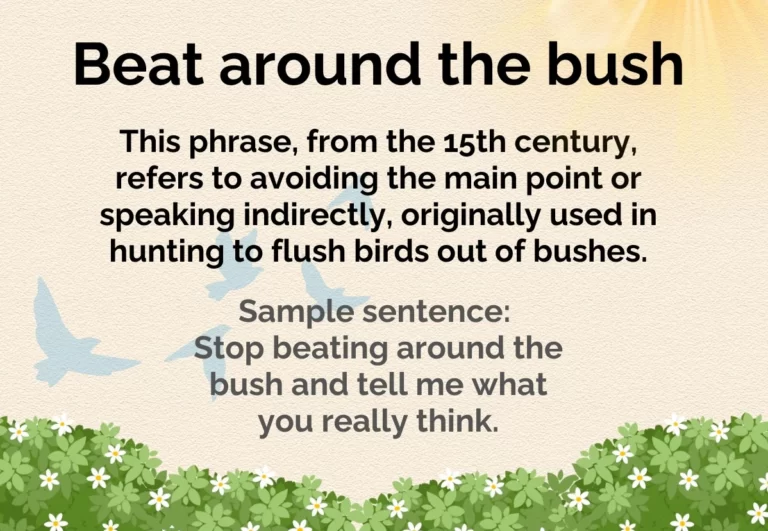
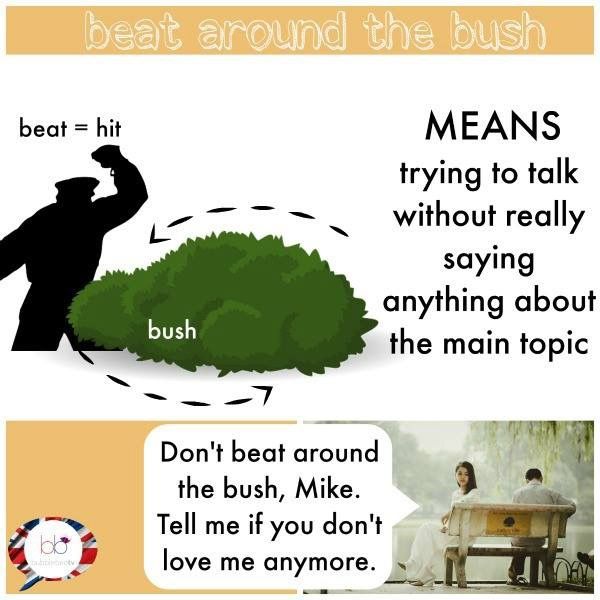
To ‘beat around the bush’ means that the person is not being direct, avoiding the main topic.
The idiom dates back hundreds of years ago.
In those times, hunters used men to beat bushes with sticks to chase any game hiding in them.
This background helps show what beating a bush actually means, but we need to take one more step to understand the meaning of this idiom clearly.
Think about the bush like it’s the main topic. To beat around the bush is to avoid that topic.
Page Description
Understand the meaning and origins of
‘beat around the bush,’
and explore examples and tips
on how to communicate more directly.
Mastering the Art of Indirect Communication
Beat Around the Bush
Why say something directly when you can take the scenic route? The expression “beat around the bush” captures the art of avoiding the point, skirting an issue, or being deliberately vague. This classic idiom has its roots in hunting traditions and has evolved into a common phrase used worldwide to describe indirect communication.
On this page, we unpack the meaning, history, and usage of “beat around the bush” through engaging text and a curated video. Whether you’re a language enthusiast, curious about its origins, or just looking for a bit of fun, you’ll leave with a clear understanding of why this expression remains relevant in everyday conversation.
Om de hete brij heen draaien
Waarom iets direct zeggen als je ook een omweg kunt maken? De uitdrukking “om de hete brij heen draaien” vat de kunst samen van het vermijden van de kern van de zaak, het ontwijken van een probleem of het opzettelijk vaag blijven. Deze klassieke zegswijze vindt zijn oorsprong in oude jachttradities en is uitgegroeid tot een veelgebruikte uitdrukking die indirecte communicatie beschrijft.
Op deze pagina ontrafelen we de betekenis, geschiedenis en het gebruik van “om de hete brij heen draaien” met boeiende tekst en een zorgvuldig geselecteerde video. Of je nu een taalenthousiasteling bent, nieuwsgierig naar de oorsprong ervan, of gewoon op zoek naar wat vermaak, je zult vertrekken met een helder begrip van waarom deze uitdrukking nog steeds relevant is in het dagelijks taalgebruik.
Caught Off Guard: Paxman’s Uncomfortable Moment on the Savile Scandal
PAXMAN fails on Dutch TV about SAVILE SCANDAL
Back to menu HIGHLY IMPORTANT
19 sep. 2014
Jeremy Paxman in a Dutch TV show.
Anchorman Twan Huys drives Paxman into a corner about the big BBC scandal Jimmy Savile. Copyright: NTR Netherlands 2014, College Tour

Overvallen: Paxmans ongemakkelijke moment rond het Savile-schandaal
JEREMY PAXMAN IN EEN NEDERLANDSE TV-SHOW.
Presentator Twan Huys drijft Paxman in het nauw over het grote BBC-schandaal rond Jimmy Savile. Copyright: NTR Nederland 2014, College Tour
Jimmy Savile and ’54 years of abusing’
Back to menu HIGHLY IMPORTANT
Essential viewing
Must-Listen Video
BBC Scandal Exposes Cover-Up of Jimmy Savile’s Pedophilia, Fueling Public Broadcaster’s Foes
Back to menu HIGHLY IMPORTANT
13 nov 2012
Visit http://www.democracynow.org to watch more reports on Democracy Now!, an independent, global news hour that airs weekdays on 1,100+ TV and radio stations.
A major media scandal has toppled the head of the BBC over the network’s handling of two reports on sex abuse, wrongly implicating a politician in one, and killing a report on its own popular BBC host, the late Jimmy Savile. One year after his death, Savile is been accused of abusing potentially hundreds of victims while the BBC stayed silent. We’re joined by three guests: Lark Turner, who has been researching and writing about the BBC scandal involving Jimmy Savile for The New York Times; Tim Gopsill, a longtime British reporter who warns that much of the criticism directed at the BBC’s handling of this scandal comes from conservative media outlets in the U.K. who want to see the network dismantled and de-funded; and Donald Findlater, a sexual abuse spokesperson for the Lucy Faithfull Foundation and director of Stop it Now! U.K.
Jeremy Paxman: Relentless Pursuit of Truth and Accountability
Clarification about the video:
Jeremy Paxman: Relentless Pursuit of Truth — But Could He Have Done More?
Jeremy Paxman is known for his sharp and relentless style of questioning. As a seasoned journalist at the BBC, his interviews, particularly on Newsnight, are iconic for their intensity and pursuit of accountability. However, in a reflective interview with Twan Huys on Dutch TV, Paxman was confronted with the idea that he could have done more regarding the Savile scandal.
Twan Huys took the stance that, given Paxman’s extensive experience at the BBC (23 years at the time), he should have had a greater role in questioning the editorial decisions around the Savile coverage. Huys suggested that Paxman, who was at the heart of BBC journalism for so long, had an obligation to intervene more actively or to have spoken out more forcefully during the scandal.
Paxman, however, denied this and maintained that, as a presenter, he was not responsible for editorial decisions. In the interview, he defended his position, asserting that it was the editors, not the on-air talent, who were responsible for the editorial choices made regarding Savile. He rejected the idea that, in hindsight, he should have taken a stronger stand, despite being in a position to do so.
This exchange raises crucial questions about the responsibility of high-profile journalists and the roles they play in major scandals. While Paxman’s reputation is built on exposing others, the Savile case casts a shadow over his own actions—or lack thereof. The tension in the interview underscores the broader issue of media institutions failing to confront wrongdoing, even when prominent figures within those institutions have the platform and power to do so.
.Clarificatie over de video:
Jeremy Paxman: Onophoudelijke Zoektocht naar Waarheid – Maar Had Hij Meer Kunnen Doen?
Jeremy Paxman staat bekend om zijn scherpe en onophoudelijke ondervragingstechniek. Als doorgewinterde journalist bij de BBC zijn zijn interviews, met name die op Newsnight, iconisch vanwege hun intensiteit en zoektocht naar verantwoording. Echter, in een reflectief interview met Twan Huys op de Nederlandse TV werd Paxman geconfronteerd met het idee dat hij meer had kunnen doen met betrekking tot het Savile-schandaal.
Twan Huys nam de positie in dat, gezien Paxman’s uitgebreide ervaring bij de BBC (23 jaar op dat moment), hij een grotere rol had moeten spelen in het bevragen van de redactionele keuzes rondom de berichtgeving over Savile. Huys stelde dat Paxman, die zo lang in het hart van de BBC-journalistiek zat, de verplichting had om actiever in te grijpen of krachtiger zijn stem te laten horen tijdens het schandaal.
Paxman ontkende dit echter en stelde dat hij als presentator niet verantwoordelijk was voor de redactionele beslissingen. In het interview verdedigde hij zijn standpunt en beweerde dat het de redacteuren waren, niet de presentatoren, die verantwoordelijk waren voor de redactionele keuzes die gemaakt werden met betrekking tot Savile. Hij verwierp het idee dat hij achteraf gezien sterker had moeten ingrijpen, ondanks dat hij in een positie was om dat te doen.
Deze uitwisseling roept belangrijke vragen op over de verantwoordelijkheid van prominente journalisten en de rol die zij spelen in grote schandalen. Terwijl Paxman’s reputatie is opgebouwd op het blootleggen van anderen, werpt het Savile-schandaal een schaduw over zijn eigen acties — of het gebrek daaraan. De spanning in het interview benadrukt het bredere probleem van media-instellingen die falen om wangedrag te confronteren, zelfs wanneer prominente figuren binnen die instellingen het platform en de macht hebben om dat te doen.
Jimmy Savile whistleblower – ‘he laughed in victim’s face’ | Channel 4 News
Back to menu HIGHLY IMPORTANT
The Professional Duty of Accountability: A Moment of Humility in the Face of Misconduct
The video “PAXMAN Fails on Dutch TV About the Savile Scandal” gives the impression that Paxman, as an iconic presenter with 23 years at the BBC at that time, washed his hands of the situation, much like Pontius Pilate. At the very least, he could have acknowledged in hindsight that he might have acted differently. Instead, he hides behind words like “the culture of the BBC” and “decisions had to be made.” As a human being, it would have been more appropriate to show some accountability, especially considering Savile’s misconduct spanned 54 years. The right thing to do would have been to take responsibility. Paxman could have been a key figure in influencing change within the BBC, had he taken a stronger stand.
De Professionele Plicht tot Verantwoordelijkheid: Een Moment van Bescheidenheid bij Wanbeleid
De video “PAXMAN Faalt op de Nederlandse TV over het Savile-schandaal” wekt de indruk dat Paxman, als iconische presentator met 23 jaar ervaring bij de BBC op dat moment, zijn handen van de situatie aftrok, bijna als Pontius Pilatus. Tenminste, hij had in hindsight kunnen toegeven dat hij misschien anders had kunnen handelen. In plaats daarvan verschuilt hij zich achter woorden als “de cultuur van de BBC” en “er moesten beslissingen genomen worden.” Als mens zou het gepaster zijn geweest om verantwoordelijkheid te nemen, vooral gezien het feit dat Savile 54 jaar lang misdragingen pleegde. Het juiste zou zijn om verantwoordelijkheid te nemen. Paxman had een sleutelrol kunnen spelen in het beïnvloeden van wat er binnen de BBC gebeurde, als hij een sterkere positie had ingenomen.
Jimmy Savile: How could he get away with it? | Channel 4 News
Back to menu HIGHLY IMPORTANT
Krishnan talks to Mark Williams-Thomas, the former detective behind the documentary which first exposed the allegations against Jimmy Savile last year, and former health minister Edwina Currie, who appointed Savile to head a Broadmoor taskforce.
Dame Janet Smith Delivers Savile Report Findings
Back to menu HIGHLY IMPORTANT
25 feb 2016
As part of an investigation into sexual abuse by Jimmy Savile, Dame Janet Smith said there is “no evidence” any senior member of the BBC was aware of his behaviour.
She delivered the findings of her report, explaining it still made for “sorry reading” as she criticised a culture of “virtually untouchable” celebrities, and staff fearful of speaking out: http://trib.al/HXqzwYF
Essential viewing
Must-Listen Video
Lord Jenkin on Stoke Mandeville and Jimmy Savile – Newsnight
Back to menu HIGHLY IMPORTANT

Post Office Inquiry: A Minister’s Responsibility in the Face of Victims’ Pain
Post Office Inquiry: former postal affairs minister challenged over failure to listen to victims
Back to menu HIGHLY IMPORTANT
18 jul 2024
Former postal affairs minister Pat McFadden has told the Horizon IT inquiry “of course I wish I had done more” to ask the Post Office if the faulty system was “as robust as they suggested”.
The Labour MP and current Chancellor for the Duchy of Lancaster urged the probe not to recommend making ministers “shadow chief executives” to prevent the bosses of state-owned companies going “rogue” following the scandal.
Mr McFadden instead said it was worth considering the implementation of an independent body “that can be called in to launch an inquiry or take action when the level of allegations reaches such a point that it looks like that is the right thing to do”.
He said ministers “do not intervene in court judgments and cannot overturn court verdicts” after telling the probe the company’s actions resulted in “innocent people being convicted”.
Mr McFadden, who was postal affairs minister between 2007 and 2009, said he does not believe he spoke to then business secretary John Hutton about allegations made by subpostmasters about the integrity of the faulty system.
He told the inquiry that the “ultimate responsibility” for a state-owned company such as the Post Office lies “with the Government”, but said he does not recall officials telling him that “they thought a miscarriage of justice was under way”.
The Labour MP for Wolverhampton South East said he was first made aware that the Post Office was prosecuting subpostmasters for alleged shortfalls at their branches in February 2009.
Ex-Post Office CEO cries during grilling at Horizon scandal inquiry
Back to menu HIGHLY IMPORTANT
Essential viewing
Must-Listen Video
Boos and groans as Paula Vennells ends three day grilling by sub-postmasters’ lawyers | ITV News
Back to menu HIGHLY IMPORTANT
24 mei 2024
Former Post Office boss Paula Vennells was booed by subpostmasters, grilled by lawyers and pushed to tears multiple times during her three days’ evidence to the Horizon IT Inquiry.
The ordained priest entered the witness box at Aldwych House in central London to face what one former subpostmistress described as a room of people with “eyes full of hatred”.
Moments of Responsibility:
The Failure to Acknowledge Accountability in Key Post Office Inquiry Moments
These videos reflect a disturbing trend: key figures involved in the Post Office scandal, like Paula Vennells and others, fail to show the necessary human behavior and accountability. In these critical moments, when confronted with their roles in the injustice, they could have shown genuine remorse and humility. Instead, they evade taking responsibility, further highlighting the absence of empathy and professionalism.
The Post Office Inquiry and the intense questioning of former leaders should have been opportunities for reflection, a chance for these individuals to admit that they failed to act as they should have. However, instead of acknowledging their responsibility, we see attempts to justify or deflect, underscoring the lack of genuine human behavior in the face of scandal.
Momenten van Verantwoordelijkheid:
Het Niet Erkennen van Verantwoordelijkheid in Belangrijke Momenten van het Post Office Onderzoek
Deze video’s weerspiegelen een verontrustende trend: sleutelpersonen die betrokken zijn bij het Post Office-schandaal, zoals Paula Vennells en anderen, tonen niet het nodige menselijk gedrag en verantwoordelijkheidsgevoel. In deze cruciale momenten, wanneer ze geconfronteerd worden met hun rol in het onrecht, hadden ze oprecht berouw en bescheidenheid kunnen tonen. In plaats daarvan ontlopen ze het nemen van verantwoordelijkheid, wat de afwezigheid van empathie en professionaliteit nog meer benadrukt.
Het Post Office Onderzoek en de intensieve ondervraging van voormalige leiders hadden kansen moeten zijn voor reflectie, een moment waarop deze individuen hadden kunnen toegeven dat ze niet gehandeld hebben zoals ze hadden moeten doen. Maar in plaats van hun verantwoordelijkheid te erkennen, zien we pogingen tot rechtvaardigen of afleiden, wat de afwezigheid van oprecht menselijk gedrag in het licht van het schandaal benadrukt.
The Use of the Idiom


Discuss a matter without coming to the point.
“He never beat about the bush when something was annoying him”
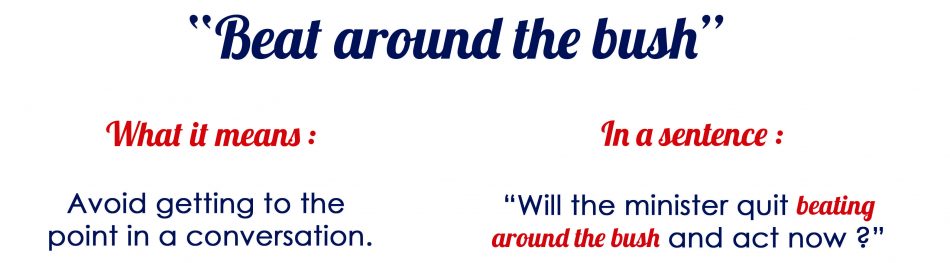
To beat about the bush
PHRASE
If you tell someone not to beat about the bush, you mean that you want them to tell you something immediately and quickly, rather than in a complicated, indirect way.
Stop beating about the bush. What’s he done?
Collins Cobuild

To talk about lots of unimportant things because you want to avoid talking about what is really important:
Quit beating around the bush and say what’s on your mind.
Cambridge Dictionary

Avoiding the main topic.
Not speaking directly about the issue.
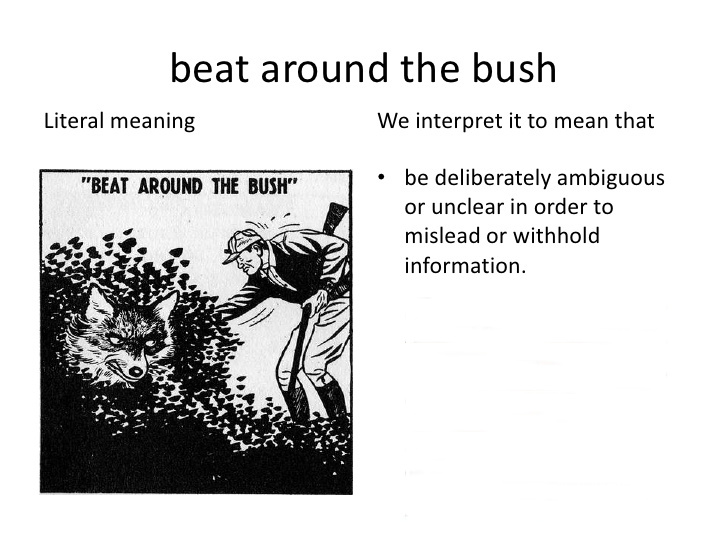

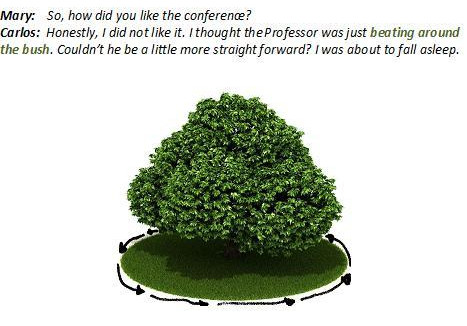
I thought the Professor was just beating around the bush.


“Beat around the bush” is a common English idiomatic expression that means to avoid getting to the point or being indirect in communication, often by using evasive or circumlocutory language. The key points of “beat around the bush” include:
Indirectness: “Beat around the bush” implies a lack of directness in communication. Instead of addressing a topic or issue directly, someone who beats around the bush tends to avoid it or speak in a roundabout way.
Avoidance: The phrase suggests a reluctance to confront or deal with an issue directly. It may involve intentionally avoiding a sensitive or difficult topic or being evasive in order to delay or avoid having to discuss or address it.
Lengthy or ambiguous communication: “Beating around the bush” often involves using unnecessary or ambiguous language, resulting in lengthy or confusing communication that may not convey the intended message clearly.
Lack of clarity: The phrase implies a lack of straightforwardness or clarity in communication, which can frustrate or confuse the listener, as the speaker is not getting to the point directly.
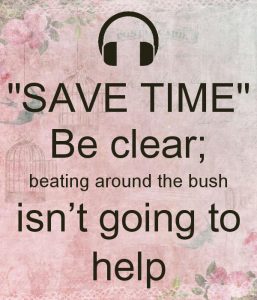
Time-wasting: “Beating around the bush” can be seen as a waste of time or an inefficient way of communicating, as it prolongs discussions or negotiations and can hinder effective communication and problem-solving.
Overall, “beat around the bush” conveys the idea of avoiding directness and clarity in communication, often resulting in unnecessary confusion, ambiguity, and delays in addressing issues or resolving problems.
English Idioms with Meaning | Beat around the Bush
7 Super Useful Idioms to Improve Your Fluency
18 aug. 2020
ABOUT THE LESSON 📚
Learning English idioms is a great way to improve your comprehension and fluency because people use them all the time in casual conversation. So I walked out the door and searched for some of the most useful idioms to teach you. Here are the idioms that I found.
1) to beat around the bush
2) to bark up the wrong tree
3) to go with the flow
4) to nip (something) in the bud
5) Knock on wood.
6) (to be) living under a rock
7) grassroots
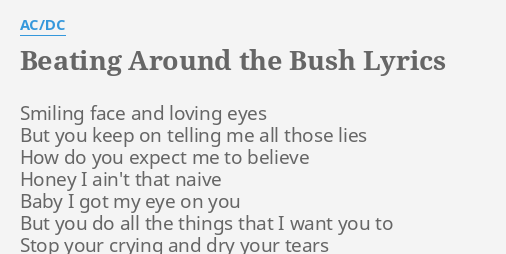
Ac Dc – Beating Around The Bush Lyrics


8 Ripped Priest Saves The Day
6 apr. 2020