Hoe een kleine brand uitgroeide tot een nationale tragedie — en tekortkomingen blootlegde die veel verder gingen dan de vlammen.
How a small fire became a national tragedy — revealing failures far beyond the flames.

Page Description
When a small fire becomes a catastrophe, the question is not only what started it, but what allowed it to spread without control.
A building designed as a place of safety became, within hours, a death trap. The Grenfell Tower fire was not simply a story about flames spreading through a building; it was the result of multiple failures coming together — failures in design, regulation, responsibility, and the ability of institutions to listen to warnings.
The disaster began with a small domestic fire in a flat. What followed was not simply a tragic accident, but the rapid escalation of an incident that exposed the breakdown of multiple layers of protection — from building design and material regulation to safety oversight and enforcement.
The scale of the tragedy was not determined by the initial fire itself, but by the conditions that allowed a controllable incident to become a catastrophic loss of life.
Grenfell revealed how far institutions can drift from their fundamental duty to protect people when safety, accountability, and human lives become secondary to systemic shortcomings.
This page explains how the fire developed, examines the wider failures and responsibilities involved, and finally returns to the human dimension through remembrance and a moment of reflection.
Grenfell Tower-ramp – De instorting van het hele systeem
Een gebouw dat ontworpen was als een veilige woonplek, veranderde binnen enkele uren in een dodelijke val. De Grenfell Tower-brand was niet alleen een verhaal over vlammen die zich door een gebouw verspreidden; het was het gevolg van meerdere tekortkomingen die samenkwamen — tekortkomingen in ontwerp, regelgeving, verantwoordelijkheid en het vermogen van instellingen om naar waarschuwingen te luisteren.
De Grenfell Tower-ramp begon met een kleine woningbrand in een appartement. Wat volgde was niet alleen een tragisch ongeval, maar de snelle escalatie van een incident dat het falen van meerdere lagen van verantwoordelijkheid binnen het systeem blootlegde — van gebouwontwerp en regelgeving rond materialen tot veiligheidstoezicht en handhaving.
De omvang van de tragedie werd niet bepaald door de oorspronkelijke brand zelf, maar door systemische tekortkomingen waardoor een beheersbaar incident kon uitgroeien tot een catastrofaal verlies van mensenlevens.
Een tragedie die aantoonde hoe ver instellingen kunnen afdwalen van hun plicht om mensen te beschermen, wanneer veiligheid, verantwoordelijkheid en mensenlevens worden overschaduwd door systemisch falen.
De pagina legt uit hoe de brand zich ontwikkelde, onderzoekt vervolgens de bredere tekortkomingen en verantwoordelijkheden die daarbij een rol speelden, en keert uiteindelijk terug naar de menselijke kant door middel van herdenking en een moment van onschuld.
The Listening Post – Covering the Grenfell fire: UK media in the spotlight
24 jun 2017
On The Listening Post this week: Distrust in Britain’s media grows following the fatal blaze at Grenfell Tower. Plus: the persecution – and resistance – of Vietnam’s bloggers.
Covering the Grenfell fire: UK media in the spotlight
A tower block fire in London that left dozens dead has channeled rage over class, race, economic and social divisions not only at Prime Minister Theresa May but also at the British media.
When reporters arrived to cover the blaze, local residents expressed anger that the media had not heeded warnings about safety or engaged more closely with issues affecting their communities during years of government austerity. Voices from a neighbourhood in grief demanded to know if only the spectacle of tragedy could make their lives newsworthy.
Contributors:
Akwugo Emejulu, professor of Sociology at University of Warwick
Dawn Foster, contributing editor for The Guardian on housing
Anna Minton, author, “Big Capital: Who Is London For?”
Maya Goodfellow, independent writer and researcher
On our radar:
Nearly a year after the failed military coup in Turkey, dozens of prominent journalists go on trial accused of conspiring against the state.
Venezuela accuses Twitter of suspending 180 accounts linked to the government.
Reporters in Myanmar face defamation charges under the country’s controversial anti-press laws.
The persecution and resistance of Vietnam’s bloggers
Since unification in 1975, Vietnam has been governed by a communist party that maintains tight control over the airwaves. However, bloggers pose a challenge to state-sanctioned narratives for one of the largest online audiences in Southeast Asia. Mainstream outlets are often forced to follow up on stories where bloggers have led the way, sometimes on issues usually declared off limits by government media managers.
The Listening Post’s Meenakshi Ravi reports on the supine state of Vietnam’s mainstream media and the government’s attempts to silence the country’s bloggers.
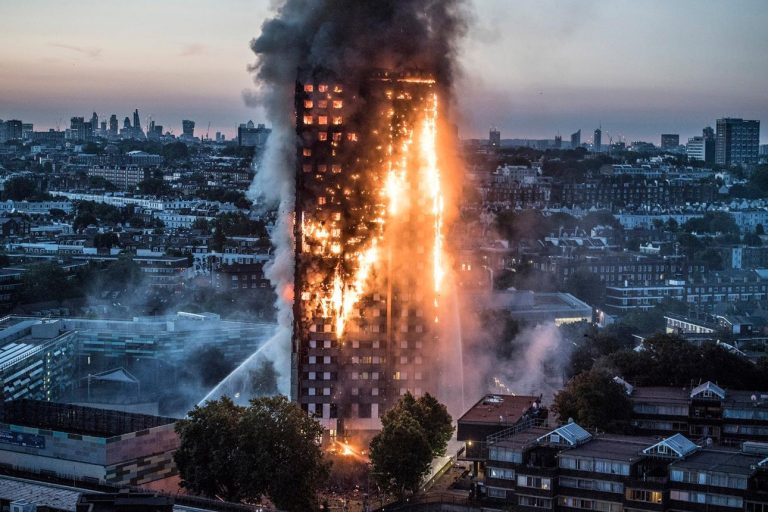
A
E
1 From a Small Flat Fire to a Tower-Wide Disaster
The scale of the tragedy was not determined by the initial fire itself, but by systemic failures that allowed a controllable incident to become a catastrophic loss of life.
The fire that began in the kitchen of a fourth-floor flat was reported to have started in a refrigerator-freezer. In its early stages, it was a localised domestic fire — the type of incident that high-rise residential buildings are designed to contain through effective fire safety measures.
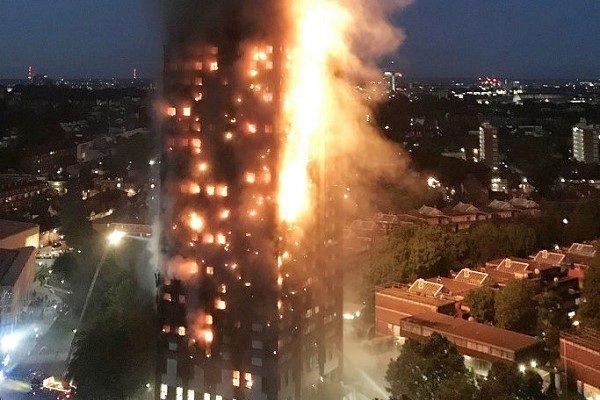
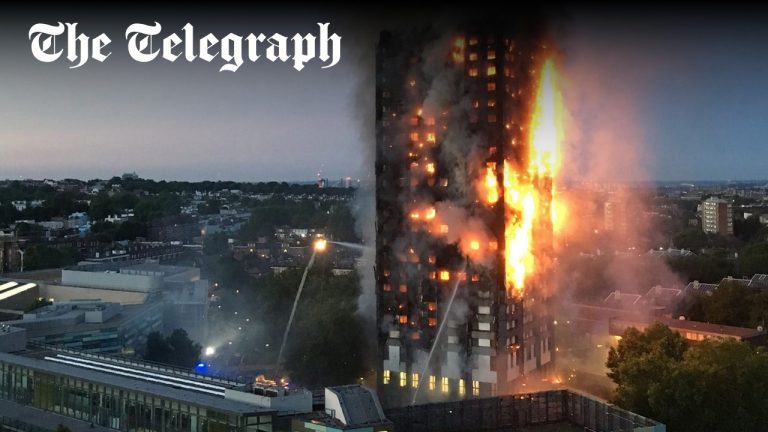
However, the fire escaped the flat and reached the exterior of the building, where it spread rapidly up the outside of Grenfell Tower. The cladding system and insulation materials used on the building’s exterior played a critical role in allowing the flames to travel vertically, causing the fire to spread far beyond the apartment where it had started.
Within hours, what had begun as a fire in a single flat had become a devastating tower-wide disaster. The tragedy was therefore not caused by the initial fire alone, but by a combination of failures in design, materials, regulation, inspection, and safety management that allowed a containable incident to become a catastrophe.
Van een kleine woningbrand tot een verwoestende ramp
De omvang van de tragedie werd niet bepaald door de oorspronkelijke brand zelf, maar door systemische tekortkomingen waardoor een beheersbaar incident kon uitgroeien tot een catastrofaal verlies van mensenlevens.
De brand die begon in de keuken van een appartement op de vierde verdieping, zou zijn ontstaan in een koelkast met vriesgedeelte. In de beginfase was het een plaatselijke woningbrand, het soort incident waarvan hoogbouwappartementen door middel van brandveiligheidsmaatregelen ontworpen zijn om deze te kunnen beheersen.
De brand wist echter uit het appartement te ontsnappen en bereikte de buitenzijde van het gebouw, waar deze zich snel langs de buitenkant van Grenfell Tower omhoog verspreidde. Het gevelbekledingssysteem en de isolatiematerialen die aan de buitenzijde van het gebouw waren aangebracht, speelden een cruciale rol bij het mogelijk maken van deze verticale verspreiding van de vlammen, waardoor de brand zich ver buiten het appartement waar deze begon kon uitbreiden.
Binnen enkele uren was wat begon als een brand in één appartement uitgegroeid tot een verwoestende ramp die de gehele woontoren trof. De tragedie werd daarom niet alleen veroorzaakt door de oorspronkelijke brand, maar door een combinatie van tekortkomingen in ontwerp, gebruikte materialen, regelgeving, inspectie en veiligheidsbeheer, waardoor een beheersbaar incident kon uitgroeien tot een catastrofe.

2 How a Single Flat Fire Became a Tower-Wide Catastrophe
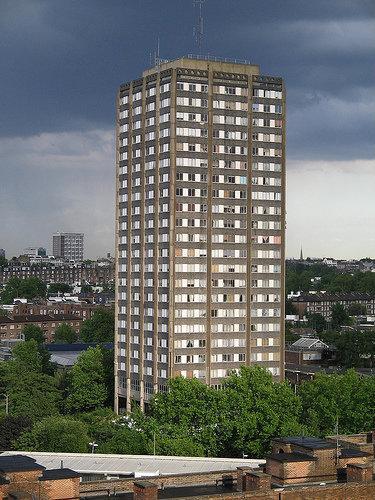
The Grenfell Tower was a 24-storey residential tower completed in 1974. The building itself was not simply an ordinary structure that “caught fire” from top to bottom. The extraordinary aspect was how the fire was able to spread externally and so rapidly.
The sequence was broadly:
- The fire started inside one apartment
The initial fire began in a kitchen on the fourth floor, reportedly involving a refrigerator-freezer. A fire in one flat is something that high-rise buildings are designed to contain through measures such as compartmentation (keeping a fire within a limited area). - The fire reached the outside of the building
During the refurbishment of Grenfell Tower, a new external cladding system and insulation materials had been installed. Once flames reached the exterior, the outside of the building became the route through which the fire could travel upwards. - The exterior acted differently from the original building structure
The concrete structure of the tower did not burn like a wooden building would. The problem was the behaviour of the materials added to the outside during refurbishment. Investigations later focused heavily on the performance of the cladding and insulation system and the failures in regulation, testing, and oversight surrounding it. - The fire spread vertically very quickly
Instead of remaining limited to one apartment, flames moved up the outside of the tower, affecting many floors. This created the devastating impression that the whole tower was “on fire at once”.
The important distinction is:
It was not that a 24-storey concrete tower from 1974 suddenly became flammable. The disaster happened because a fire that should have remained localised was able to interact with the external refurbishment system in a way that allowed rapid vertical spread.
Hoe een brand in één appartement kon uitgroeien tot een ramp
De Grenfell Tower was een woontoren met 24 verdiepingen, die in 1974 werd voltooid. Het gebouw zelf was niet zomaar een gewone constructie die van boven tot onder “in brand vloog”. Het buitengewone aspect was de manier waarop de brand zich via de buitenzijde van het gebouw zo snel kon verspreiden.
De gebeurtenissen verliepen in grote lijnen als volgt:
- De brand begon in één appartement
De oorspronkelijke brand ontstond in een keuken op de vierde verdieping en zou verband hebben gehouden met een koelkast met vriesgedeelte. Een brand in één appartement is een type incident dat hoogbouwgebouwen normaal gesproken zijn ontworpen om te beheersen door middel van maatregelen zoals brandcompartimentering (het beperken van een brand tot een bepaald gedeelte van het gebouw).
- De brand bereikte de buitenzijde van het gebouw
Tijdens de renovatie van Grenfell Tower waren nieuwe gevelbekleding en isolatiematerialen aan de buitenzijde van het gebouw aangebracht. Toen de vlammen de buitenkant bereikten, werd deze buitenlaag de route waarlangs de brand zich omhoog kon verspreiden.
- De buitenzijde gedroeg zich anders dan de oorspronkelijke gebouwstructuur
De betonnen constructie van de woontoren brandde niet zoals een houten gebouw zou doen. Het probleem lag in het gedrag van de materialen die tijdens de renovatie aan de buitenzijde waren toegevoegd. Onderzoeken richtten zich later sterk op de prestaties van het gevelbekledings- en isolatiesysteem en op tekortkomingen in regelgeving, testen en toezicht daaromheen.
- De brand verspreidde zich zeer snel verticaal
In plaats van beperkt te blijven tot één appartement, verspreidden de vlammen zich langs de buitenzijde van de woontoren omhoog en bereikten zij meerdere verdiepingen. Hierdoor ontstond het verwoestende beeld dat de hele toren “tegelijk in brand stond”.
Het belangrijke onderscheid is:
Het was niet zo dat een betonnen woontoren uit 1974 met 24 verdiepingen plotseling zelf brandbaar werd. De ramp ontstond doordat een brand die beperkt had moeten blijven, in contact kwam met het externe renovatiesysteem, waardoor een snelle verticale verspreiding mogelijk werd.

3 Cover-Ups
What Really Happened at Grenfell…
29 dec 2025 #truecrimedocumentary #crimedocumentaries #truecrimedocumentaries
A deep dive into the disturbing true story of the Grenfell Tower fire. On the 14th of July 2017, what started out as a small kitchen fire destroyed a 23-storey residential building. The final death toll would be 72… whipping out entire families.
The aftermath of this tragic event gets even worse with a government inquest uncovering a disturbing truth.
A
E
The Grenfell Tower Fire: London’s High-Rise Scandal
11 jun 2025 #construction #architecture #engineering
The UK’s worst building disaster should never have happened.
Support the Grenfell Foundation 👉 https://www.grenfellfoundation.org.uk…
Full story here – https://theb1m.com/video/grenfell-tow…
Additional footage and images: Grenfell Tower Inquiry, ABC News, BBC News / Newsnight, Bloomberg, CBC News, ChiralJon / CC BY 2.0, David Pickup, Declan Conor, 5 News, ITV News, Natalie Oxford / CC BY 4.0, NBC News, Nick Hawkes, On Demand News, Reuters, Sky News, Tamas Babai and The Independent.
00:00 The Night of the Fire
03:47 The Tower Today
05:33 A Survivor’s Account
07:48 The Causes
08:48 Cost-cutting
10:14 Combustible Cladding
11:51 Stay-Put Policy
13:30 The Report
15:49 Government Failings
17:17 What’s Changed?
21:03 Leaseholders’ Struggles
24:45 The Remediation Plan
26:17 The Wait for Justice
29:29 The Tower’s Future
31:02 Conclusion
A
E
Essential viewing
Must-Listen Video
Grenfell Inquiry: Government “Cover-Up” As It Hid Cladding Dangers
6 dec 2021
Grenfell Inquiry
Government accused of “cover-up” hiding cladding dangers
“One of the major scandals of our time”, says lawyer for bereaved and survivors
UK had “unbridled passion for deregulation”, with health and safety “diminished” by successive governments
A
E
The Unforgivable Tragedy of Grenfell Tower: What Went Wrong? | Autentic Documentary
12 jun 2024 #grenfelltower
Eight years ago, on June 14, 2017, a disastrous fire broke out at Grenfell Tower in London and burned for 60 hours. This is the story of the engineering, design and socio-political factors that led to the devastating Grenfell Tower fire that killed 72 people. #grenfelltower
______
Autentic Documentary is the ultimate source for captivating documentaries on a wide range of topics. Our mission is to spark your mind and guide you through the most fascinating stories of the world. We believe that curiosity and knowledge are boundless, showcasing remarkable technologies, fascinating people, breathtaking nature and landscapes, outer space, mysteries, and current trends from around the globe. Step into the world of Autentic and be enchanted by the wonders of reality.
______
Copyright: All content featured on this channel is legally licensed from multiple copyright holders and distributors. If you suspect any copyright infringement, please contact us promptly at youtube@autentic.com.
Autentic Documentary is owned by Beta Film GmbH and managed by Autentic GmbH. All rights reserved.
A
E
Essential viewing
Must-Listen Video
The Grenfell Tower Disaster (Full Documentary)
24 feb 2026
On June 14, 2017, a small kitchen fire in Grenfell Tower became the deadliest residential fire in modern UK history. Within 32 minutes, the 24-storey building was engulfed. Seventy-two people died.
But Grenfell was not a freak accident.
This documentary examines how cost-cutting decisions, combustible cladding, rigged fire tests, regulatory loopholes, and systemic failures turned a concrete tower that had stood for 40 years into a vertical firestorm. Drawing on findings from the Grenfell Tower Inquiry — including the 2024 Phase 2 report — we break down the “cassette effect,” the collapse of the “stay put” policy, and the long road toward accountability.
Nearly a decade later, no criminal charges have been brought. Thousands still live in buildings with dangerous cladding. And the system that defined what “safe” meant is still being rebuilt.
This is the full story of how Grenfell happened — and why its lessons still matter.
Subscribe for in-depth disaster documentaries focused on systemic failures and prevention.
Source:
The National Archives — Research Guide: Records of the Grenfell Tower Inquiry (undated; references events up to Feb 2025)
HM Government — Grenfell Tower Site Update, April 2025: Summary of Recording (PDF)
Grenfell Tower Memorial Commission / RIBA — Press release on five shortlisted memorial design teams (dated early 2025)
HM Government — Deputy Prime Minister’s decision on the future of Grenfell Tower (Feb 2025 announcement)
HM Government — Cabinet Office statement on pausing debarment investigations (Jul 2025)
Metropolitan Police / CPS — Update on criminal investigation progress (dated May 2024, referencing timelines into 2025–2026)
HM Government — Full response to the Grenfell Tower Inquiry’s final report (26 Feb 2025)
The Guardian — “Ministers accused of betrayal after pausing Grenfell contract investigations” (10 Jul 2025)
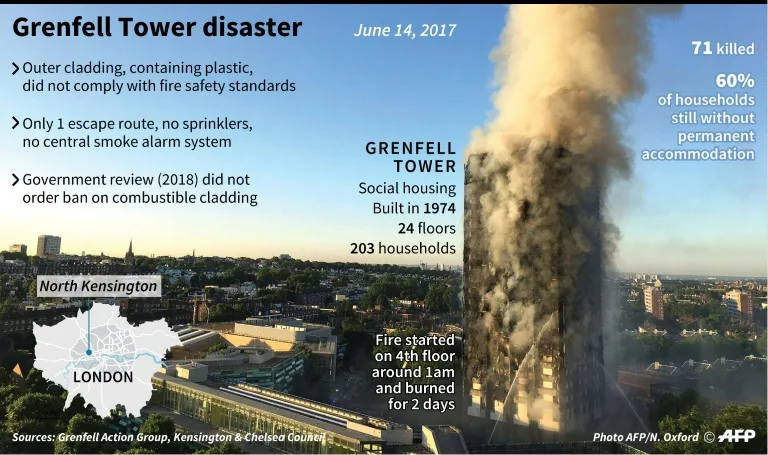
The Grenfell Tower Disaster — A Failure Beyond the Fire
The Grenfell Tower fire was not only a devastating tragedy in which 72 people lost their lives. It also revealed deeper failures within a system that was supposed to protect residents.
The fire itself was the visible disaster, but the questions that followed went far beyond the flames: How could known risks remain unaddressed? How could warnings, responsibilities, and decisions across different organisations fail to prevent such a catastrophe?
This documentary examines not only what happened on that night, but also the wider failures behind it — failures in safety, regulation, responsibility, and the protection of human lives.
Grenfell became a painful reminder that when systems lose sight of the people they exist to serve, the consequences can be devastating.
De Grenfell Tower-ramp — Een falen dat verder ging dan de brand
De brand in de Grenfell Tower was niet alleen een verschrikkelijke tragedie waarbij 72 mensen het leven verloren. Het bracht ook diepere tekortkomingen aan het licht binnen een systeem dat de bewoners had moeten beschermen.
De brand zelf was de zichtbare ramp, maar de vragen die daarna ontstonden gingen veel verder dan de vlammen: Hoe konden bekende risico’s onopgelost blijven? Hoe konden waarschuwingen, verantwoordelijkheden en beslissingen van verschillende organisaties gezamenlijk tekortschieten om zo’n ramp te voorkomen?
Deze documentaire onderzoekt niet alleen wat er die nacht gebeurde, maar ook de bredere tekortkomingen erachter — tekortkomingen op het gebied van veiligheid, regelgeving, verantwoordelijkheid en de bescherming van mensenlevens.
Grenfell werd een pijnlijke herinnering dat wanneer systemen het zicht verliezen op de mensen die zij behoren te dienen, de gevolgen vernietigend kunnen zijn.
Essential viewing
Must-Listen Video

4 After the Grenfell Tower Fire – The Search for Truth and Accountability
After the Grenfell Tower fire on 14 June 2017, the consequences continued for many years. The tragedy did not end with the fire itself; it led to investigations, legal proceedings, changes in building safety rules, and a long struggle for justice by survivors and bereaved families.
The immediate aftermath
- The fire killed 72 people, including residents of the tower and a number of children.
- Hundreds of residents who survived lost their homes and belongings.
- The surrounding community created memorials and support networks, while many survivors struggled with trauma, grief, and the consequences of displacement.
The investigation and public inquiry
A major independent investigation was established through the Grenfell Tower Inquiry.
The inquiry examined:
- the decisions that allowed combustible cladding and insulation systems to be installed,
- the role of building regulations and inspections,
- the actions of companies involved in refurbishment,
- the response of authorities before and during the fire.
The first phase concluded that the external cladding system was a major factor in how the fire spread so rapidly. The final report was published in September 2024 and concluded that the disaster resulted from years of failures by multiple organisations, including manufacturers, contractors, regulators, and government bodies.
Criminal investigations and legal consequences
Following the inquiry, investigations into possible criminal offences continued. The Metropolitan Police Service has been investigating potential offences including corporate manslaughter and other serious crimes. As of mid-2026, no criminal trial has yet concluded.
The building itself
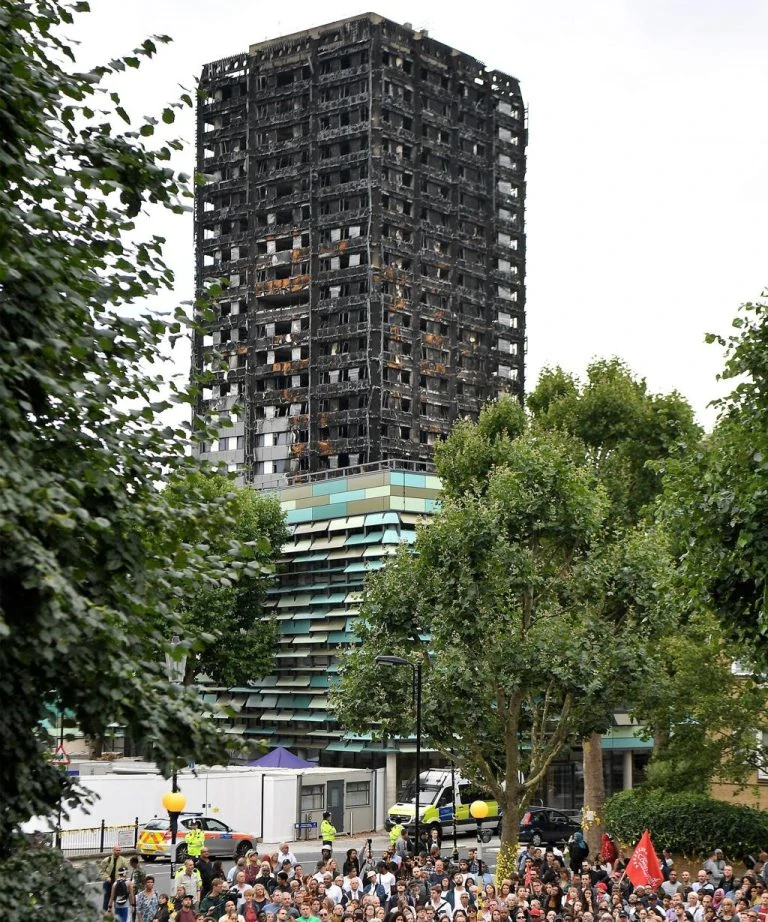
Grenfell Tower remained standing for years after the fire as a visible reminder of the tragedy. The tower was covered in protective wrapping and became a place of remembrance.
A decision was later made to remove the tower because of safety concerns and the wishes of many bereaved families and survivors. The process of dismantling the structure began in the mid-2020s and is expected to take time.
Changes to building safety
The tragedy led to significant changes in the United Kingdom:
- New restrictions on combustible materials in high-rise buildings.
- Greater responsibilities for building owners and managers.
- The creation of a new regulatory framework through the Building Safety Regulator.
- Wider efforts to identify and remove unsafe cladding from other buildings.
The continuing human story
For many families, the central issue has never only been the building or the regulations. It has been the question of how and why people were placed in a situation where their safety was compromised.
That is why Grenfell is often discussed not only as a fire disaster, but as a failure of responsibility, accountability, and trust.
Wat gebeurde er na de brand in de Grenfell Tower?
Na de brand in de Grenfell Tower op 14 juni 2017 eindigde de tragedie niet met het doven van de vlammen. De gevolgen bleven nog vele jaren voelbaar. De ramp leidde tot onderzoeken, juridische procedures, veranderingen in de regelgeving voor gebouwen en een langdurige zoektocht naar gerechtigheid door overlevenden en nabestaanden.
De onmiddellijke gevolgen
- Bij de brand kwamen 72 mensen om het leven, waaronder bewoners van de toren en meerdere kinderen.
- Honderden bewoners die de brand overleefden, verloren hun woning en vrijwel al hun bezittingen.
- De lokale gemeenschap richtte herdenkingsplaatsen en steunnetwerken op, terwijl veel overlevenden jarenlang worstelden met trauma, verdriet en de gevolgen van hun gedwongen verhuizing.
Het onderzoek en de openbare enquête
Er werd een onafhankelijk grootschalig onderzoek ingesteld door de Grenfell Tower Inquiry.
Het onderzoek richtte zich onder meer op:
- de beslissingen waardoor brandbare gevelbekleding en isolatiematerialen konden worden toegepast;
- de rol van bouwvoorschriften en toezicht;
- het handelen van bedrijven die betrokken waren bij de renovatie;
- de reactie van overheidsinstanties vóór en tijdens de brand.
De eerste fase van het onderzoek concludeerde dat het gebruikte gevelbekledingssysteem een belangrijke factor was in de uitzonderlijk snelle verspreiding van de brand. Het eindrapport verscheen in september 2024 en stelde vast dat de ramp het gevolg was van jarenlang falen door meerdere betrokken partijen, waaronder fabrikanten, aannemers, toezichthouders en overheidsinstanties.
Strafrechtelijk onderzoek en mogelijke gevolgen
Na het onderzoek gingen de onderzoeken naar mogelijke strafbare feiten verder. De Metropolitan Police Service onderzoekt mogelijke overtredingen, waaronder bedrijfsmatige doodslag en andere ernstige strafbare feiten.
Tot medio 2026 is er nog geen afgeronde strafzaak geweest.
Wat gebeurde er met de toren?
De Grenfell Tower bleef jarenlang staan als een zichtbaar en aangrijpend symbool van de tragedie. De toren werd omgeven door een beschermende bekleding en bleef een plaats van herinnering en rouw.
Later werd besloten de toren te verwijderen vanwege veiligheidszorgen en mede op basis van de wensen van veel nabestaanden en overlevenden. Het proces van ontmanteling begon halverwege de jaren 2020 en zal geruime tijd in beslag nemen.
Veranderingen in de bouwveiligheid
De ramp leidde in het Verenigd Koninkrijk tot belangrijke veranderingen:
- strengere beperkingen op het gebruik van brandbare materialen bij hoogbouw;
- grotere verantwoordelijkheden voor eigenaren en beheerders van gebouwen;
- de oprichting van een nieuw toezichtkader via de Building Safety Regulator;
- bredere maatregelen om onveilige gevelbekleding bij andere gebouwen op te sporen en te verwijderen.
Het blijvende menselijke verhaal
Voor veel families gaat het bij Grenfell niet alleen om het gebouw of de regelgeving. Het gaat vooral om de vraag hoe en waarom mensen in een situatie terecht konden komen waarin hun veiligheid onvoldoende werd beschermd.
Daarom wordt Grenfell niet alleen gezien als een grote brandramp, maar ook als een ernstig falen op het gebied van verantwoordelijkheid, toezicht en vertrouwen.
London’s Grenfell Tower Fire Wasn’t Just an Accident
A
E
Grenfell: The Fire of London
A
E
The mystery of the Grenfell Tower baby – BBC Newsnight
Newsnight is the BBC’s flagship news and current affairs TV programme – with analysis, debate, exclusives, and robust interviews.
A
E

How many people lost their lives in the Grenfell Tower fire? – BBC Newsnight
13 jul 2017
Police believe that at least 80 people died in Grenfell Tower. But some suggest that the number of victims could be considerably higher. David Grossman reports on the number of people who have lost their lives in the devastating fire.
Newsnight is the BBC’s flagship news and current affairs TV programme – with analysis, debate, exclusives, and robust interviews.
A
E
Grenfell survivor: ‘You just killed my son’ – BBC Newsnight
13 jul 2017
Andreia Gomes was seven months pregnant when she escaped from the 21st floor of Grenfell Tower with her husband and their two daughters. The baby did not survive. The family have been telling their story – including how one of their daughter’s was diagnosed with cyanide poisoning – for the first time to Newsnight’s Katie Razzall. * We should stress we do know where the cyanide came from – whether it was plastics inside the building or from the insulation *
Newsnight is the BBC’s flagship news and current affairs TV programme – with analysis, debate, exclusives, and robust interviews.
A
E
5 When Known Dangers Became Reality
The danger of combustible materials was not discovered after Grenfell. The tragedy revealed that known risks were underestimated, ignored, misunderstood, or allowed to pass through a failing system.
It is not correct to say that nobody knew the cladding material was combustible. However, the full story is more complicated.
The material used in the Grenfell Tower refurbishment was mainly aluminium composite material (ACM) panels with a polyethylene (PE) core. Polyethylene is a plastic material and is highly combustible. The danger of this type of material was known in the construction industry before the Grenfell fire in 2017.
The question is not simply: “Did people know it could burn?”
The more difficult question is: “Why was it still allowed to be used on a high-rise residential building?”
Some important points:
- The fire risks of combustible cladding systems were known internationally before Grenfell. There had already been fires involving similar external cladding systems in other countries, including high-rise buildings.
- Manufacturers knew the characteristics of their materials. The fact that a plastic core could burn was not a newly discovered property after Grenfell.
- Building regulations and testing systems failed to prevent the danger. A major problem was that regulations, interpretation of rules, testing methods, and enforcement allowed materials to be used in ways that created unacceptable risks.
- The Grenfell Inquiry found that there were serious failures across many levels: manufacturers, contractors, building control, regulators, and government departments.
Where your young civil engineering student may have meant “with hindsight” is that today’s students learn about Grenfell with the benefit of the full evidence. They are taught the consequences very clearly: a combination of combustible materials, design decisions, poor fire safety understanding, and regulatory failures created a catastrophic situation.
But from an engineering perspective, the key point is:
The danger of combustible materials was not discovered after Grenfell. The tragedy revealed that known risks were underestimated, ignored, misunderstood, or allowed to pass through a failing system.
That is why your title “Collapse of the Entire System” is actually a very meaningful description. The failure was not one single mistake by one person. It was a chain of decisions and omissions where many safeguards that should have protected residents did not work.
Toen bekende risico’s werkelijkheid werden
Het gevaar van brandbare materialen werd niet pas na Grenfell ontdekt. De tragedie maakte duidelijk dat bekende risico’s werden onderschat, genegeerd, verkeerd begrepen of door een falend systeem konden blijven bestaan.
Het is niet juist om te zeggen dat niemand wist dat het gebruikte gevelbekledingsmateriaal brandbaar was. Het volledige verhaal ligt echter ingewikkelder.
Het materiaal dat bij de renovatie van de Grenfell Tower werd gebruikt, bestond voornamelijk uit aluminium composietpanelen (ACM) met een kern van polyethyleen (PE). Polyethyleen is een kunststof en is zeer brandbaar. Het risico van dit soort materiaal was binnen de bouwsector al bekend vóór de brand in de Grenfell Tower in 2017.
De vraag is daarom niet eenvoudigweg:
“Wisten mensen dat dit materiaal kon branden?”
De veel moeilijkere vraag is:
“Waarom werd het dan toch toegestaan om dit materiaal te gebruiken bij een hoog woongebouw?”
Enkele belangrijke punten:
- De brandrisico’s van brandbare gevelbekledingssystemen waren internationaal al bekend vóór Grenfell. Er waren eerder al branden geweest waarbij vergelijkbare externe gevelsystemen betrokken waren, waaronder bij hoogbouw.
- Fabrikanten kenden de eigenschappen van hun materialen. Het feit dat een kunststof kern kon branden, was geen nieuwe ontdekking die pas na Grenfell aan het licht kwam.
- Bouwvoorschriften en test- en controlesystemen slaagden er niet in dit gevaar te voorkomen. Een belangrijk probleem was dat regelgeving, de interpretatie van voorschriften, testmethoden en handhaving het mogelijk maakten dat materialen werden toegepast op manieren die onaanvaardbare risico’s met zich meebrachten.
- Het onderzoek naar Grenfell stelde vast dat er op meerdere niveaus ernstige tekortkomingen waren: bij fabrikanten, aannemers, bouwtoezicht, toezichthoudende instanties en overheidsdiensten.
Wanneer de jonge student civiele techniek/architectuur sprak over “met de kennis van nu”, bedoelde hij mogelijk dat huidige studenten Grenfell bestuderen met alle beschikbare informatie over wat er is gebeurd. Zij leren heel duidelijk welke gevolgen een combinatie van factoren kan hebben: brandbare materialen, ontwerpkeuzes, onvoldoende begrip van brandveiligheid en tekortkomingen in regelgeving en toezicht kunnen samen leiden tot een catastrofale situatie.
Maar vanuit technisch oogpunt is het belangrijkste punt:
Het gevaar van brandbare materialen werd niet pas na Grenfell ontdekt. De tragedie maakte duidelijk dat bekende risico’s werden onderschat, genegeerd, verkeerd begrepen of door een falend systeem konden blijven bestaan.
De titel van deze webpagina, “Collapse of the Entire System”, is daarom een betekenisvolle omschrijving. Het falen was niet één enkele fout van één persoon. Het was een keten van beslissingen, nalatigheden en tekortkomingen waarbij meerdere veiligheidsmechanismen die bewoners hadden moeten beschermen, niet hebben gefunctioneerd.
6 Grenfell Tower: A Tragedy That Should Never Have Happened
The Grenfell Tower fire was not an unavoidable accident. It was a preventable tragedy resulting from a series of failures in safety, regulation, decision-making, and accountability.
The UK’s Deadliest Building Disaster: The Grenfell Tower Fire
7 jul 2026 #documentary #disaster #tragedy
The UK’s Deadliest Building Disaster: The Grenfell Tower Fire
On 14 June 2017, a fire broke out in a fourth-floor flat of Grenfell Tower, a 24-storey residential block in West London. Within hours, the entire building was engulfed in flames. 72 people lost their lives in what became the deadliest structural fire in the UK since World War II.
But this wasn’t a freak accident. It was a disaster years in the making.
In this video, we investigate how a routine kitchen fire turned into an inferno that consumed an entire tower block. We examine the flammable cladding that turned the building into a chimney, the warnings from residents that went unheard, the failures in fire safety regulation, and the “stay put” advice that would prove catastrophic for so many.
This is the story of Grenfell Tower — the people who lived there, the night everything went wrong, and the search for accountability that continues to this day.
A
E
Essential viewing
Must-Listen Video
The question that remains is simple,
yet deeply troubling:
How could this have happened?
The Grenfell Disaster: London’s High Rise Scandal
1 sep 2025 THE ULTIMATE BINGE
On the 14th of June 2017, a fire tore through Grenfell Tower in West London. Within hours, the blaze had engulfed almost the entire 24-storey building, leading to the deaths of 72 people and leaving hundreds more injured or displaced.
Grenfell was not just a tragedy of unimaginable loss, it became a symbol of systemic failure. Questions arose about the safety of high-rise housing, the cladding used on the tower, and the way residents’ repeated warnings were ignored. The fire highlighted deep issues of inequality, neglect, and accountability within modern Britain.
In this episode, we revisit the events of that night, the heroic rescue attempts, the stories of those who survived, and the aftermath that continues to affect families, campaigners, and the country at large. Grenfell is more than a single event. It is a lasting reminder of the importance of justice, responsibility, and listening to communities before disaster strikes.
The Grenfell Tower fire left an indelible mark on the UK. Do you think enough has been done since the tragedy to ensure nothing like this can ever happen again…?
A
E
Essential viewing
Must-Listen Video
Damning final report into Grenfell Tower fire published | BBC News
4 sep 2024 #BBCNews #London
The Grenfell Tower fire that killed 72 people in London, UK, in 2017 was the result of a chain of failures by governments, “dishonest” companies and a lack of strategy by the fire service, the final report of a six-year public inquiry has concluded.
The report sets out a “path to disaster” at Grenfell stretching back to the early 1990s over how fire safety in high rise buildings has been managed and regulated.
The coalition and Conservative governments “ignored, delayed or disregarded” concerns about the safety of industry practices, the inquiry added.
A manufacturer of cladding products “deliberately concealed” the fire risks they posed, the report said.
A
E
Essential viewing
Must-Listen Video
The man who predicted the Grenfell Tower fire: first in-depth interview
21 mei 2018
Eddie Daffarn wrote a blog post predicting the Grenfell Tower fire seven months before it happened. He lived on the 16th floor of the London tower.
Those who survived the fire will also be heard later in the inquiry. One person whose evidence will be closely listened to is that of Eddie Daffarn. An activist in the tower, his Grenfell Action blog warned of the tower’s mismanagement and neglect.
Shockingly, he warned seven months before the disaster that it would take a fire in a tower block like Grenfell to bring the negligent guilty to book.
A
E
Essential viewing
Must-Listen Video
Grenfell: Grief, loss and being a teenager – BBC Newsnight
The Listening Post – Covering the Grenfell fire: UK media in the spotlight
A Little Boy Suddenly Stood Up And Called Out To Simon… Then Everything Changed | BGT
London’s Grenfell Tower Fire Wasn’t Just an Accident
A
E
The Grenfell Disaster: London’s High Rise Scandal
1 sep 2025 THE ULTIMATE BINGE
On the 14th of June 2017, a fire tore through Grenfell Tower in West London. Within hours, the blaze had engulfed almost the entire 24-storey building, leading to the deaths of 72 people and leaving hundreds more injured or displaced.
Grenfell was not just a tragedy of unimaginable loss, it became a symbol of systemic failure. Questions arose about the safety of high-rise housing, the cladding used on the tower, and the way residents’ repeated warnings were ignored. The fire highlighted deep issues of inequality, neglect, and accountability within modern Britain.
In this episode, we revisit the events of that night, the heroic rescue attempts, the stories of those who survived, and the aftermath that continues to affect families, campaigners, and the country at large. Grenfell is more than a single event. It is a lasting reminder of the importance of justice, responsibility, and listening to communities before disaster strikes.
The Grenfell Tower fire left an indelible mark on the UK. Do you think enough has been done since the tragedy to ensure nothing like this can ever happen again…?
A
E
Essential viewing
Must-Listen Video
Surviving the Inferno: Escaping Grenfell Tower
A
E

The Grenfell Tower fire (Disaster Documentary)
13 jun 2021
The in-depth story 2017 Grenfell Tower Fire in West London.
Subscribe for more fascinating disaster documentaries: / @darkrecordsdocs
On June 13, 2017, a warm, quiet night in the North Kensington area of west London looked far from turning into a chaotic one. Residents of the lower-income Lancaster West Housing Estate were sound asleep. In one flat on the fourth floor, a strange smell from his kitchen woke up a tenant. When he went to check it, he saw smoke coming from the back of his refrigerator. The fire quickly spread across the poor man’s kitchen, who immediately raised the alarm and called the firefighters. The fire seemed like a challenge London firefighters were facing every day. However, once the fire went out of the kitchen window, it turned into a blaze that not even 250 firefighters could extinguish for the next 24 hours.
But how come that a thing like a refrigerator burned down a 24-story tower?
A
E
Essential viewing
Must-Listen Video
Grenfell Tower: The 21st floor – BBC Newsnight
28 sep 2017
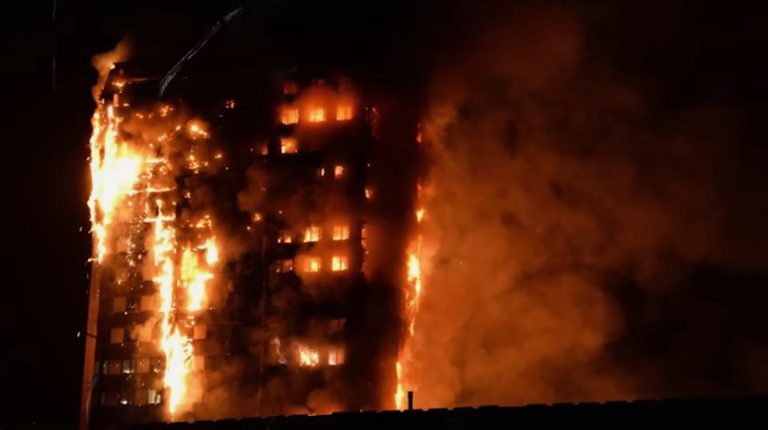
Each floor of Grenfell Tower is a kind of microcosm of London – and of the tragedy that unfolded that terrible night in June. This is the harrowing story of the 10 adults and five children who lived on the 21st floor. Nine of them survived the fire. Six of them – and one unborn baby – perished. After weeks of research, Katie Razzall and producers Nick Menzies and Sara Moralioglu have pieced together their stories for the first time. * Warning: This film contains content that some viewers may find distressing *
Reporter: Katie Razzall
Producers: Nick Menzies and Sara Moralioglu
Researcher: Yasminara Khan
Camera: Jonathan Callery, Jack Garland, Keith Morris, Ian Pritchard and Luke Winsbury
Picture editors: Dominic Lutier and Philippa Shaylor
Graphic design: Mark Edwards, Sandra Rodriguez Chillida, Jacqueline Galvin and Steve Glew
A
E
The Grenfell Tower disaster was not the result of one single failure. As with other major disasters, including the Herald of Free Enterprise ferry disaster, there is often a natural desire to identify one cause because it provides a sense of understanding and closure.
However, catastrophes of this scale are rarely caused by one isolated mistake. They usually emerge from a chain of decisions, omissions, assumptions, and failures that come together at one devastating moment.

7 Remembering the Human Cost of Grenfell
Henry’s Last Words “I’ve Been Stabbed… I Can’t Breathe” 😔 | In Memory of Henry Nowak
4 jun 2026 #HenryNowak #TwoTierBritain #BritishLivesMatter
Follow me on X – X.com/GlamGrafter
Henry’s Last Words – “I’ve Been Stabbed… I Can’t Breathe” 😔 | In Memory of Henry Nowak
This song is a heartbreaking tribute to 18-year-old Henry Nowak, a young British lad with Polish heritage who was stabbed in Southampton. His final words — “I’ve been stabbed… I can’t breathe” — were met with doubt instead of urgent help. This is his story, told through music.
In a country that once protected its own, Henry’s death shines a painful light on two-tier Britain. While some lives trigger immediate outrage and national mourning, others are met with silence. Henry was just walking home. One knife. One moment. And a response that failed him.
*Lyrics:*
Young lad from Britain, bright future in his eyes
Walking through the city under ordinary skies
One knife, one moment, everything went black
He looked at the copper and said “I’ve been stabbed”
“I’ve been stabbed… I can’t breathe” — the words he kept repeating
While they stood there doubting, his life was slowly leaving
Henry, oh Henry, your last words still ring
“I’ve been stabbed” and they didn’t believe a thing
While the world burned for others on the evening news
Your blood dried quietly, no one knelt for you
They threw bins and the riot cops came down
But when it’s our kids bleeding, suddenly silence all around
While the politicians hide and the media decide
Z polskiej krwi pochodził, imię nosił z dumą
Syn imigrantów, co marzył o lepszym życiu tu
Teraz leży w ziemi, w obcym kraju zdradzonym
Henry, bracie nasz, nie zapomnimy o Tobie
Henry, oh Henry, your last words still ring
“I’ve been stabbed” and they didn’t believe a thing
Bridge
One more innocent gone, another family torn apart
Stabbed in the heart of a country that once had British heart
Henry, mój bracie, Twoje słowa wciąż brzmią
We’ll carry your name through the silence and the storm
For every forgotten son who bled on British ground
We rise up for justice, we won’t back down
This is our country, these are our children, our fight
Henry Nowak — pamiętamy Cię dziś
Henry carried Polish blood with pride. Son of immigrants who came seeking a better life for their family. A young man with his whole future ahead — talented, hopeful, and now gone. His last words still echo: “I’ve been stabbed… I can’t breathe.” Yet instead of rushing to save him, the system hesitated.
This isn’t just another stabbing statistic. This is a son of our nation, forgotten too quickly while the country pours resources elsewhere. We remember Henry because every British parent deserves to know their child is safe on our streets.
This song is for Henry, for his family, and for every forgotten British son and daughter. We will not stay silent. We will carry his name.
Rest in peace, Henry Nowak. Your words will not be buried.
If this touched you, please like, comment, share and subscribe. Turn on notifications so these stories aren’t allowed to disappear.
We remember the forgotten. We fight for our own. This is our country. These are our children.
Henry Nowak — pamiętamy Cię dziś.
Polish Translations from the song:
Z polskiej krwi pochodził, imię nosił z dumą → He came from Polish blood, he carried his name with pride
Syn imigrantów, co marzył o lepszym życiu tu → Son of immigrants who dreamed of a better life here
Teraz leży w ziemi, w obcym kraju zdradzonym → Now he lies in the ground, in a betrayed foreign country
Henry, bracie nasz, nie zapomnimy o Tobie → Henry, our brother, we will not forget you
Henry, mój bracie, Twoje słowa wciąż brzmią → Henry, my brother, your words still echo
pamiętamy Cię dziś → we remember you today
#HenryNowak #RestInPeaceHenry #TwoTierBritain #BritishLivesMatter #ForgottenSon #StabbingCrisis #RememberHenry
In memory of every young life lost while the nation looked the other way. Time to wake up and protect our own.
🇬🇧
A
E
8 A Moment of Innocence, Wonder and Human Vulnerability
Prank Patung Lucu
When watching this short video of only 1:02, centred around what appears to be a statue, you can see the children’s almost unimaginable reaction of fear.
Their spontaneous fright and instinctive attempt to run away show a pure and unfiltered response to something they experience as real in that moment.
Een moment van onschuld, verwondering en menselijke kwetsbaarheid
Wanneer je deze korte video van slechts 1:02 bekijkt, waarin een standbeeld centraal staat, zie je bij de jonge kinderen een nauwelijks voor te stellen schrikreactie.
Hun spontane angst en het instinctief weglopen tonen een pure en onbevangen reactie op iets wat zij op dat moment als werkelijkheid ervaren.
Wanneer systemen die mensen moeten beschermen falen, kunnen de gevolgen onomkeerbaar worden. Een keten van beslissingen, nalatigheden en tekortkomingen kan ertoe leiden dat een beheersbare brand uitgroeit tot een onvoorstelbare ramp. Een tragedie niet veroorzaakt door één fout, maar door het wegvallen van vele beschermingslagen die bedoeld waren om mensen veilig te houden.
When systems meant to protect people fail, the consequences can become irreversible. A chain of decisions, omissions and failures can turn a manageable fire into an unimaginable disaster. A tragedy not caused by one mistake, but by the collapse of many layers of protection that were meant to keep people safe.