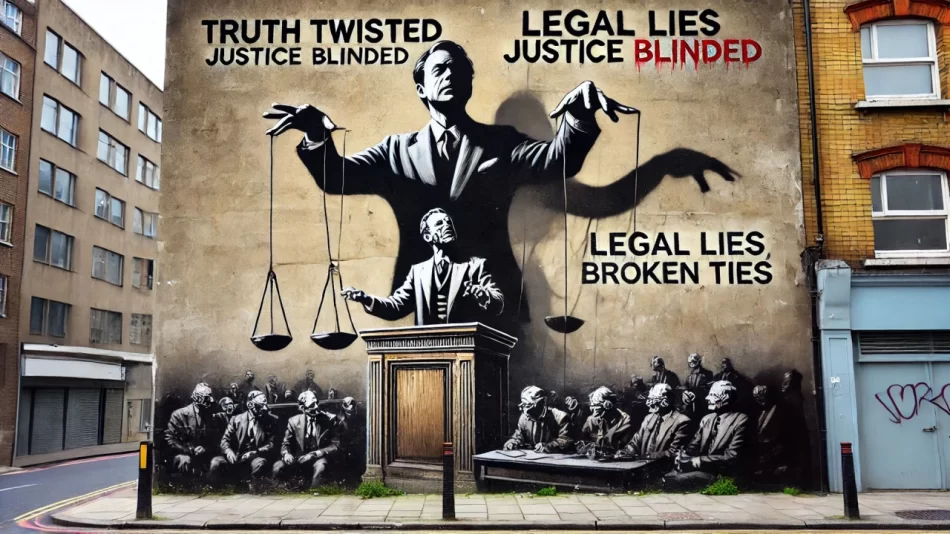
When someone says that wrongful convictions are “exceptions” — a term that dangerously downplays the scale and severity of the problem — they fail to recognize the much deeper issue. The reality is that the problem runs far beyond the number of wrongful convictions. Every wrongful conviction is not an isolated incident but a glaring sign of a system that has failed those it was meant to protect.
While the number of wrongful convictions may appear small when compared to the total number of convictions, the damage they cause is immeasurable. It’s not about the quantity, but about the fact that these miscarriages of justice happen at all. People like Liam Allan, who spent years living under the threat of wrongful imprisonment, falsely accused of a crime he didn’t commit — even though the text messages on the DVD, a download of the accuser’s phone, clearly proved his innocence. The system should have seen that his accusation was false, but instead, he faced the constant risk of being sent to prison.
The argument that wrongful convictions are “exceptions” ignores the reality. Even when a case is finally resolved, like Liam Allan’s, it doesn’t undo the trauma and suffering caused by a system that failed him. We need to understand that these so-called “exceptions” are only the tip of the iceberg. They represent the visible effects of a far greater problem within our justice system.
We cannot afford to brush off these cases as rare anomalies. Instead, we must focus on the undeniable truth that wrongful convictions, regardless of their number, reveal a fundamental flaw in the system. It’s time to shift the conversation from the rarity of these cases to the urgent need for justice and reform, to ensure that no one else suffers the same fate.
Onterechte Veroordelingen: Geen Uitzonderingen, Maar Symptomen van een Kapot Systeem
Wanneer iemand zegt dat onterechte veroordelingen “uitzonderingen” zijn — een term die het risico loopt de omvang en ernst van het probleem te bagatelliseren — dan erkennen ze niet het veel diepere probleem. De realiteit is dat het probleem veel verder gaat dan het aantal onterechte veroordelingen. Elke onterechte veroordeling is geen geïsoleerd incident, maar een opvallend teken van een systeem dat heeft gefaald in zijn taak om de mensen te beschermen die het had moeten dienen.
Hoewel het aantal onterechte veroordelingen klein lijkt in vergelijking met het totale aantal veroordelingen, is de schade die ze veroorzaken onmeetbaar. Het gaat niet om het aantal, maar om het feit dat deze gerechtelijke missers überhaupt kunnen plaatsvinden. Mensen zoals Liam Allan, die jarenlang leefde met de dreiging van onterechte gevangenisstraf, ten onrechte beschuldigd van een misdaad die hij niet had begaan — terwijl de tekstberichten op de dvd, een download van de telefoon van de aanklager, duidelijk zijn onschuld bewezen. Het systeem had moeten zien dat zijn beschuldiging vals was, maar in plaats daarvan stond hij constant bloot aan het risico om naar de gevangenis te worden gestuurd.
Het argument dat onterechte veroordelingen “uitzonderingen” zijn, negeert de realiteit. Zelfs wanneer een zaak eindelijk wordt opgelost, zoals die van Liam Allan, doet dat niets af aan het trauma en het lijden dat hij heeft ervaren door een systeem dat hem in de steek liet. We moeten begrijpen dat deze zogenaamde “uitzonderingen” slechts het topje van de ijsberg zijn. Ze vertegenwoordigen de zichtbare gevolgen van een veel groter probleem binnen ons rechtssysteem.
We kunnen deze gevallen niet afdoen als zeldzame anomalieën. In plaats daarvan moeten we de onmiskenbare waarheid onder ogen zien dat onterechte veroordelingen, ongeacht hun aantal, een fundamenteel falen van het systeem onthullen. Het is tijd om de discussie te verschuiven van de zeldzaamheid van deze gevallen naar de dringende behoefte aan gerechtigheid en hervorming, zodat niemand anders hetzelfde lot hoeft te ondergaan.