Wanneer systemen falen en de waarheid uit beeld raakt
When systems fail, and the truth fades from view
Page Desciption
Explore how systemic failure and the framing of narratives can hide the truth, influence decisions, and create lasting consequences for innocent people.
1 Understanding the Concepts: Systemic Failure and Framing
1 Understanding Systemic Failure
The term “systemic failure” typically refers to a breakdown or malfunction within a system, where things are not operating as they should, often due to flaws or mismanagement at various levels. It usually assumes that, under normal circumstances, the system would function as intended but something has gone wrong in the process.
A “systemic failure” doesn’t inherently cover the idea of actions being taken to prevent the system from failing, or deliberately setting things up to ensure the system works. However, if the failure involves intentional steps or neglect that undermines the system’s functioning, you could argue it falls under a broader, more malicious form of failure — where it’s not just an error or glitch, but a deliberate action that makes the failure inevitable.
In other words, if people intentionally manipulate or cut off parts of a system to ensure it can’t work as expected, that’s not simply a failure—it’s sabotage or corruption. This might fit into the broader idea of “systemic breakdown,” but it would be more about how the system is undermined than just things going wrong unintentionally.
2 Framing and Manipulating the Narrative
When framing occurs, it’s a form of manipulation that distorts the reality of a situation, creating a misleading or false image of events or people. It’s like when someone shapes a narrative to fit their agenda, even though the truth of the matter is different.
Framing can involve highlighting certain facts while omitting others, exaggerating details, or reinterpreting actions in a way that paints the wrong picture of someone or something. The result is that it looks like a “systemic failure,” but really, it’s a strategic effort to mislead or shift blame.
In a situation where framing is at play, it’s no longer about a failure of the system itself but about how information is manipulated to create a false narrative. This could involve, for instance, making someone who didn’t belong in the system seem like they were the cause of the failure, when in reality, they were a victim of a broken or corrupt system.
It’s like setting up a trap and then blaming the person who falls into it, as though they were the one who broke the system when, in fact, the system was designed to fail them all along.
.
De begrippen begrijpen: systeemfalen en framing
1 Het Begrip Structureel Falen
De term “structureel falen” (systemic failure) verwijst doorgaans naar een storing of defect binnen een systeem, waarbij de dingen niet functioneren zoals ze zouden moeten, vaak door fouten of slecht beheer op verschillende niveaus. Meestal wordt ervan uitgegaan dat, onder normale omstandigheden, het systeem zou functioneren zoals bedoeld, maar dat er iets mis is gegaan in het proces.
Een ‘systeemfout’ heeft niet per definitie de betekenis dat er maatregelen worden genomen om te voorkomen dat het systeem faalt, of dat er bewust stappen worden ondernomen om het systeem goed te laten functioneren.
Echter, als het falen gepaard gaat met opzettelijke stappen of verwaarlozing die de werking van het systeem ondermijnen, kun je stellen dat het valt onder een bredere, meer kwaadaardige vorm van falen – waarbij het niet slechts om een fout of glitch gaat, maar een opzettelijke actie die het falen onvermijdelijk maakt.
Dit betekent, als mensen opzettelijk delen van een systeem manipuleren of uitschakelen om ervoor te zorgen dat het niet werkt zoals verwacht, is dat niet gewoon een falen – het is sabotage of corruptie. Dit past misschien wel in het bredere begrip “systemische storing”, maar het zou dan meer gaan over hoe het systeem wordt ondermijnd dan over dingen die onbedoeld misgaan.
2 Framing en Manipulatie
Wanneer framing plaatsvindt, is het een vorm van manipulatie die de werkelijkheid van een situatie vertekent, waardoor een misleidend of vals beeld van gebeurtenissen of mensen ontstaat. Het is zoals wanneer iemand een verhaal creëert om het in zijn agenda te passen, hoewel de waarheid anders is.
Framing kan inhouden dat bepaalde feiten worden uitgelicht terwijl andere worden weggelaten, details worden overdreven, of acties op een manier worden herinterpreteerd die het verkeerde beeld van iemand of iets schildert. Het resultaat is dat het lijkt op een “systemisch falen,” maar in werkelijkheid is het een strategische poging om misleiding te creëren of de schuld af te schuiven.
In een situatie waarin framing speelt, gaat het niet meer om een falen van het systeem zelf, maar om hoe informatie wordt gemanipuleerd om een vals verhaal te creëren. Dit kan bijvoorbeeld betekenen dat iemand die niet tot het systeem behoorde, wordt gepresenteerd als de oorzaak van het falen, terwijl diegene in werkelijkheid het slachtoffer was van een gebroken of corrupt systeem.
Het is zoals een valstrik opzetten en vervolgens de persoon die erin valt de schuld geven, alsof zij degene waren die het systeem hebben gebroken, terwijl in werkelijkheid het systeem vanaf het begin was ontworpen om hen te laten falen.
.
2 From Systemic Failure to Individual Blame: The Framing Trap
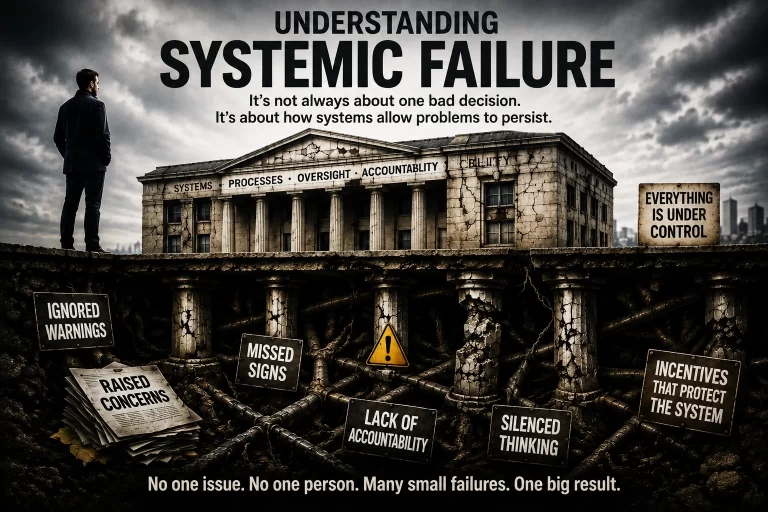
Systemic failure:
A symbolic illustration showing how systemic failure can develop: individual voices, warnings, and evidence become surrounded by layers of bureaucracy, institutional power, and defensive narratives. The image represents the tension between those who try to reveal the truth and systems that protect themselves instead of confronting their own failures.
The framing trap:
An illustration showing how a person can become trapped inside a constructed narrative. Instead of examining the wider system, attention is directed toward an individual who is presented as the problem. The frame around the person influences how others interpret the situation, while the larger causes remain outside the picture.
Van systeemfalen naar individuele schuld: de valkuil van framing
Systeemfalen:
Een symbolische illustratie die laat zien hoe systeemfalen kan ontstaan: individuele stemmen, waarschuwingen en bewijzen raken omringd door lagen van bureaucratie, institutionele macht en defensieve verhalen. Het beeld toont de spanning tussen mensen die de waarheid proberen zichtbaar te maken en systemen die zichzelf beschermen in plaats van hun eigen tekortkomingen onder ogen te zien.
De valkuil van framing:
Een illustratie die laat zien hoe een persoon gevangen kan raken binnen een geconstrueerd verhaal. In plaats van de bredere werking van het systeem te onderzoeken, wordt de aandacht gericht op één individu dat als het probleem wordt voorgesteld. Het frame rond die persoon beïnvloedt hoe anderen de situatie interpreteren, terwijl de dieperliggende oorzaken buiten beeld blijven.
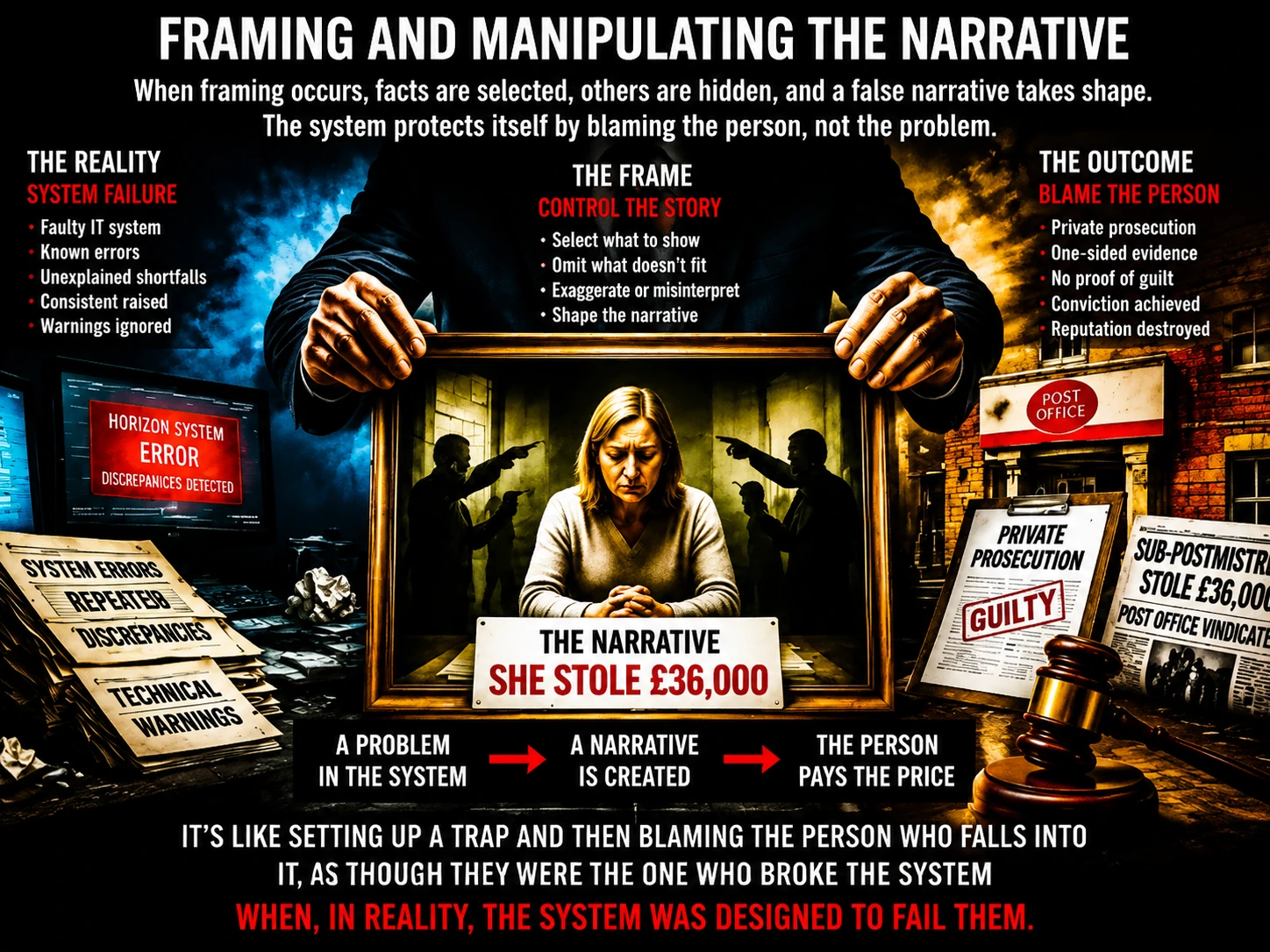
The framing trap: When a complex failure is reduced to the actions of one individual, the frame itself can hide the deeper causes.
3 A Simple Experiment: How Context Shapes Our Perception
Candid Camera Classic: Quick Parking Bar

This classic Candid Camera experiment shows, in a simple and humorous way, how strongly people respond to the situation they are placed in. The participants do not question the unexpected behaviour of the parking barrier; they adapt to the frame created around them.
In more serious situations, framing can have much greater consequences: it can influence how problems are understood, where attention is directed, and who is held responsible.
Een eenvoudig experiment: hoe context bepaalt wat we zien
Dit klassieke Candid Camera-experiment laat op een eenvoudige en humoristische manier zien hoe sterk mensen reageren op de situatie waarin zij terechtkomen. De deelnemers stellen het onverwachte gedrag van de slagboom niet ter discussie; zij passen zich aan aan het kader dat door de situatie wordt gecreëerd.
In ernstigere situaties kan framing veel grotere gevolgen hebben: het kan beïnvloeden hoe problemen worden begrepen, waar de aandacht op wordt gericht en wie uiteindelijk verantwoordelijk wordt gehouden.