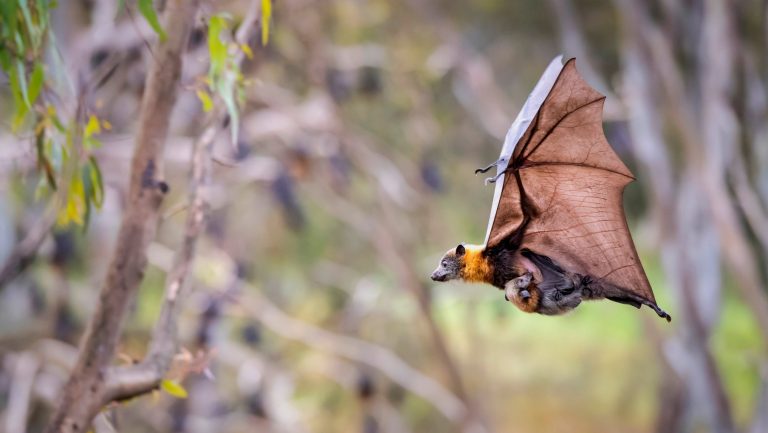
The Grey-headed flying fox is the largest bat species in Australia, with a wingspan of up to 1 meter (3.3 feet). These fruit and nectar-eating bats are essential pollinators, helping maintain the health of Australian forests. They feed on a variety of fruits, nectar, and even honey, playing a key role in the pollination of native trees, such as eucalyptus. This powerful mother, carrying her pup, reflects the nurturing bond within this species, as the young depend on their mothers for care and nourishment during their early stages of life.
The image of a grey-headed flying fox carrying her pup typically captures the bond between mother and young, often seen in the wild hanging from trees or roosting in large colonies. The pups are born live and remain attached to their mothers for several months, feeding and growing until they are old enough to fly and forage independently.
In such a photograph, you’d typically see the mother’s distinctive grey fur with a light-coloured head and a young pup clinging to her. These bats play an important ecological role in pollination and seed dispersal, particularly for fruiting trees.
De Grey-headed flying fox is de grootste vleermuissoort in Australië, met een spanwijdte van tot wel 1 meter (3,3 voet). Deze fruit- en nectar-etende vleermuizen zijn essentiële bestuivers die helpen bij het behoud van de gezondheid van de Australische bossen. Ze voeden zich met een verscheidenheid aan fruit, nectar en zelfs honing, en spelen een sleutelrol bij de bestuiving van inheemse bomen, zoals eucalyptus. Deze krachtige moeder, die haar jong draagt, weerspiegelt de verzorgende band binnen deze soort, aangezien de jongen afhankelijk zijn van hun moeders voor zorg en voeding tijdens hun vroege levensfasen.”
“De afbeelding van een grey-headed flying fox die haar jong draagt, legt meestal de band tussen moeder en jong vast, vaak gezien in het wild terwijl ze van bomen hangen of roestend in grote kolonies. De jongen worden levend geboren en blijven gedurende meerdere maanden aan hun moeders vastgehecht, terwijl ze zich voeden en groeien totdat ze oud genoeg zijn om zelfstandig te vliegen en voedsel te zoeken.”
“Op zo’n foto zou je meestal de kenmerkende grijze vacht van de moeder zien met een lichtgekleurde kop en een jong dat zich aan haar vasthoudt. Deze vleermuizen spelen een belangrijke ecologische rol in de bestuiving en zaadverspreiding, vooral voor fruitdragende bomen.