Wanneer vergelijkbare tekortkomingen zich doorheen verschillende generaties blijven herhalen, is de vraag niet langer alleen wat er is gebeurd — maar vooral hoe het mogelijk was dat dit kon blijven gebeuren.
When similar failures appear across generations, the question is no longer only what happened — but how it was allowed to happen.

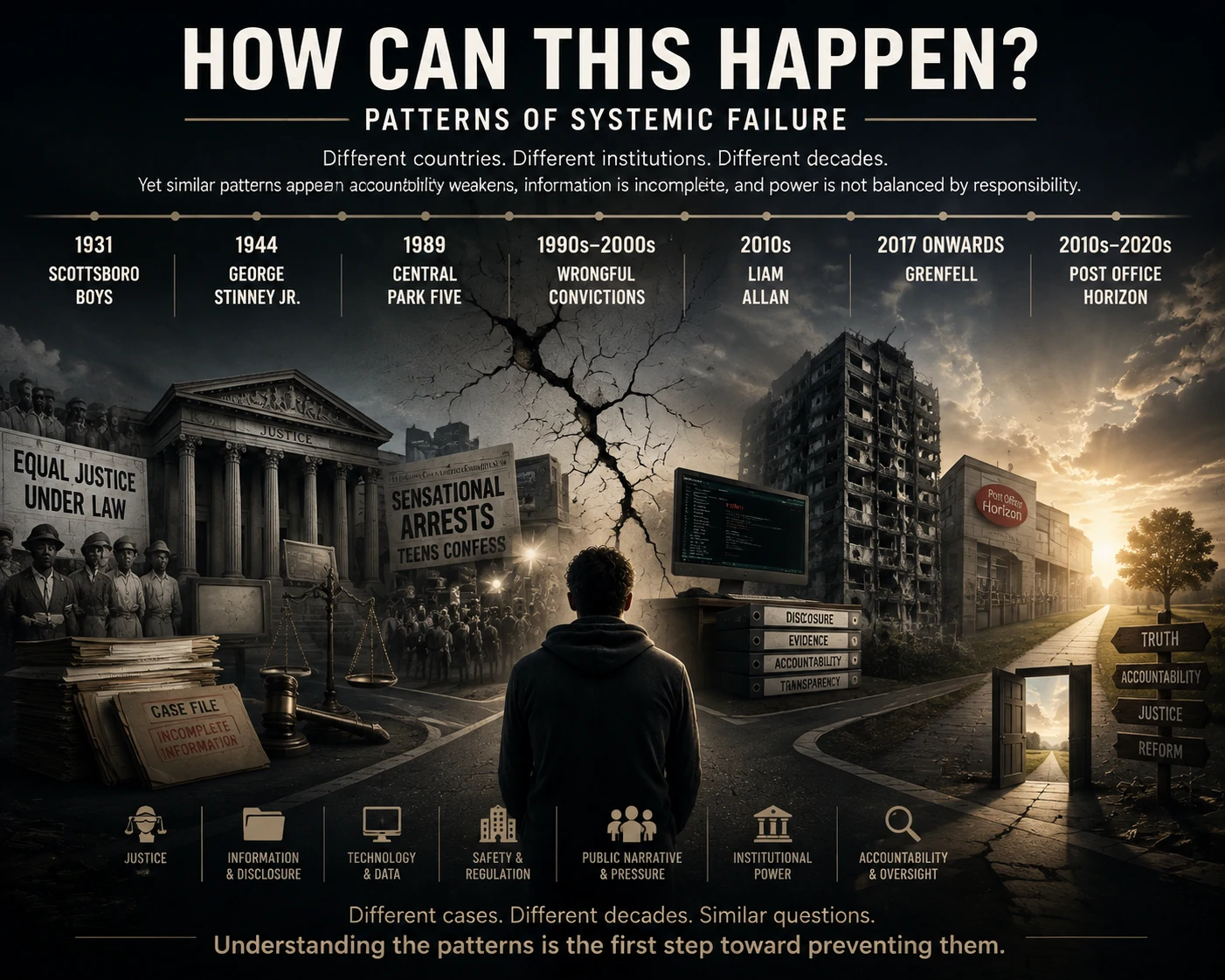
Across different countries, institutions, and decades, the circumstances are never exactly the same. Yet many cases reveal similar patterns: individuals caught in a system where assumptions, incomplete information, institutional pressure, or failures of accountability can lead to devastating consequences.
How Can This Happen? Understanding Patterns of Systemic Failure
Different cases. Different countries. Different institutions. Yet similar mechanisms can appear when accountability weakens, information is incomplete, and power is not balanced by responsibility.
Important: the cases are not identical. The pattern is in the mechanisms.
.
Over verschillende landen, instellingen en tijdsperiodes heen zijn de omstandigheden nooit volledig hetzelfde. Toch laten veel zaken vergelijkbare patronen zien: mensen die gevangen raken in een systeem waarin aannames, onvolledige informatie, institutionele druk of het ontbreken van verantwoording kunnen uitmonden in ingrijpende en verwoestende gevolgen.
“
.
1 A Recurring Pattern Across Generations
1931 — Scottsboro Boys
A case where prejudice, pressure, and unequal access to justice contributed to a deeply flawed process.
1944 — George Stinney Jr.
A child facing the full power of the justice system, with fundamental safeguards failing.
1989 — Central Park Five
A powerful public narrative developed before the full truth was known.
1990s–2000s — Wrongful convictions
Michael Morton, Ricky Jackson, and Anthony Ray Hinton spent years fighting conclusions reached by systems that had failed to properly recognise the truth.
2010s — Liam Allan
A case showing how failures in disclosure and the handling of evidence can place a person in an unbearable situation before the truth is restored.
2017 onwards — Grenfell
A tragedy showing how failures in safety, accountability, and decision-making can affect an entire community.
2010s–2020s — Post Office Horizon
A case showing how unreliable information, institutional power, and failures of accountability can have devastating consequences for many individuals.
These are not isolated events. These are recurring questions about how systems protect — or fail to protect — people.
The mechanism How systems weaken, fail, and allow harm to continue. Understanding Systemic Failure
Hannah Arendt: Eichmann was an ordinary man
A
E
Page Description
Exploring how repeated failures across generations reveal weaknesses in systems, accountability, and the responsibility to learn from the past.
2 The Human Cost
The damage begins before the final verdict
A person can lose:
- reputation,
- relationships,
- mental wellbeing,
- career opportunities,
- financial security,
- trust in institutions,
even when the truth is eventually recognised.
A justice system is not only measured by whether it eventually corrects its mistakes, but also by how effectively it prevents innocent people from being placed in that situation in the first place.
.
Falsely imprisoned for a rape he didn’t commit | The Wrong Man: 17 Years Behind Bars – BBC
A
E
3 The Final Balance
.
Honesty can return. Truth can be recovered. But the human cost of failure reminds us why prevention and accountability matter.
.