Page Description
A court clears Tommy Lee Walker 70 years after his execution, despite a water-tight alibi.
1 Tommy Lee Walker: A 70-Year Fight for Justice
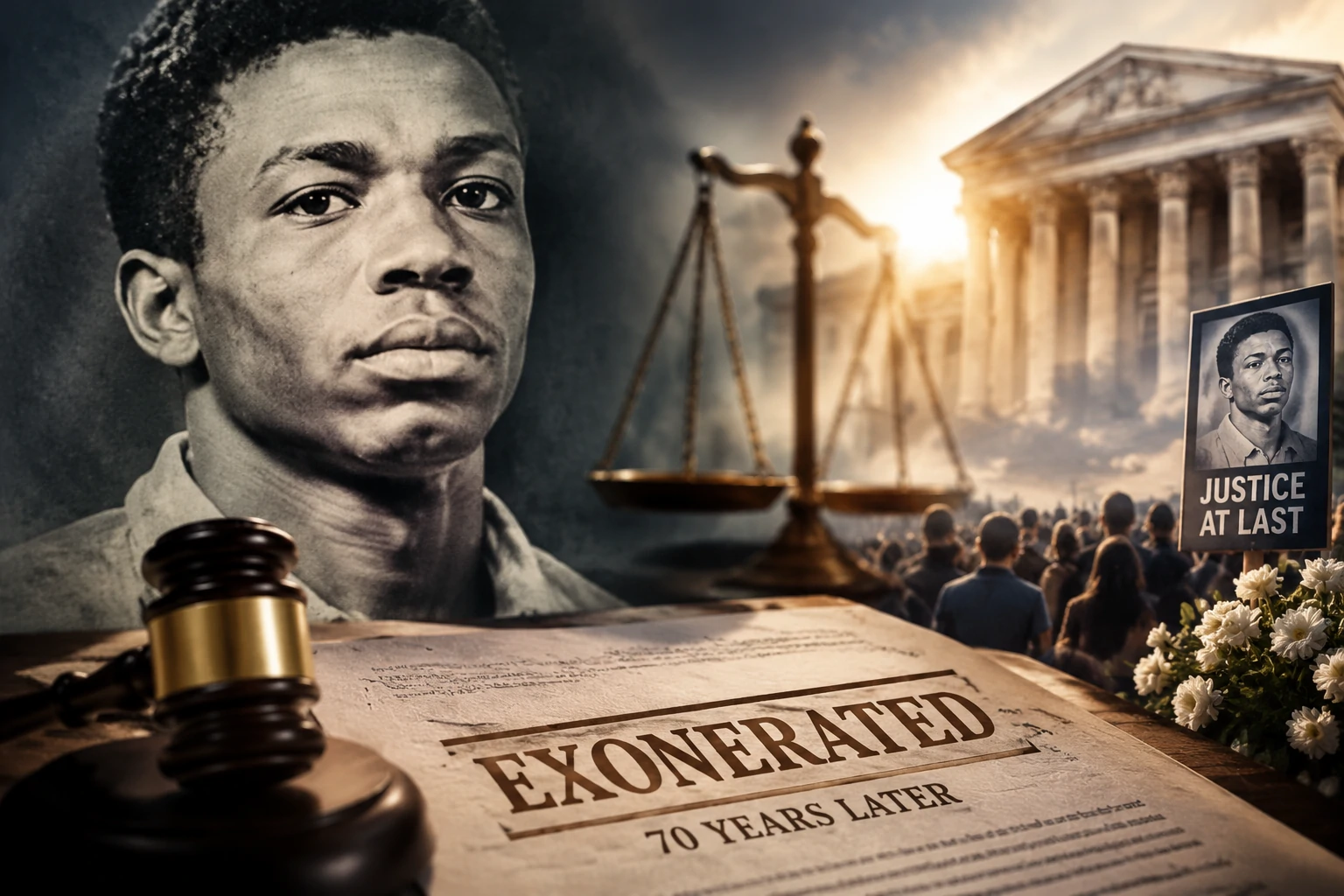
Tommy Lee Walker was executed over seven decades ago, despite presenting a water-tight alibi. Now, 70 years later, a court has finally cleared his name, recognizing the grave injustice that took place. His case serves as a stark reminder of the mistakes made within the justice system and the enduring fight for truth, even long after the facts have been obscured by time. This ruling brings a long-awaited sense of justice, albeit posthumously, shedding light on the profound impact of wrongful convictions.
Tommy Lee Walker: Een 70-Jarige Strijd voor Gerechtigheid
Tommy Lee Walker werd meer dan zeven decennia geleden geëxecuteerd, ondanks een waterdicht alibi. Nu, 70 jaar later, heeft een rechtbank eindelijk zijn naam gezuiverd en de ernstige onrechtvaardigheid erkend die destijds plaatsvond. Zijn zaak is een krachtig voorbeeld van de fouten die in het rechtssysteem zijn gemaakt en de voortdurende strijd voor de waarheid, zelfs lang nadat de feiten door de tijd zijn vertroebeld. Deze uitspraak brengt een langverwachte gerechtigheid, zij het postuum, en werpt licht op de diepgaande gevolgen van onterechte veroordelingen.
BREAKING: Texas Sentenced a 21 Y/O to Death for Murder He Didn’t Commit — Exonerated 70 Years Later
23 jan 2026 #Texas #DeathRow #TrueCrimeDocumentary
In 1956, Tommy Lee Walker was wrongfully executed for the rape and murder of Venice Lorraine Parker in Dallas, Texas. Seventy years later, Dallas County has posthumously exonerated him, acknowledging the racial injustice and systemic flaws that led to his wrongful conviction.
This video explores the details of the case, the fight for justice, and how Tommy Lee Walker’s story changed the lives of his family and the justice system.
Essential viewing
Must-Listen Video
2 Rock-Bottom Alibi: You Can Hardly Have Something More Reliable
No matter what methods or pressures were used in the interrogation, the facts were clear and irrefutable—just like in the case of John Bunn. Mr. Walker had an unshakable alibi that was backed by multiple witnesses, and John Bunn, similarly, was innocent with a story that was impossible to align with the crime.
There was no possible way, from a factual standpoint, that Mr. Walker could have committed the crime. His alibi wasn’t just a weak claim; it was solid evidence—verified by multiple people who were there. And the same goes for John Bunn: no amount of coercion or manipulation could change the fact that he wasn’t even at the scene of the crime.
In both cases, these individuals were trapped by an unjust system, and the failure to recognize the obvious truth in both cases reveals just how deeply flawed the system was in their times. They were innocent, but in a system where bias, racial injustice, and corruption ran deep, innocence didn’t always matter.
In both cases, their stories should never have been questioned in the first place, and yet the system twisted and turned their lives upside down, forcing them into the unimaginable struggle of proving their innocence despite the evidence.
It’s a painful reminder that no matter how impossible the facts may be to ignore, in a flawed system, innocent people like Mr. Walker and John Bunn were wrongly convicted for crimes they had no part in.
Onweerlegbaar Alibi: Je Kunt nauwelijks iets Meer Betrouwbaar Hebben
Wat er ook gedaan is, er is geen enkele mogelijkheid om te verdoezelen dat Mr. Walker onschuldig is. Hij had een keihard alibi dat werd ondersteund door tien getuigen die zijn aanwezigheid op een andere locatie bevestigden. Het is volkomen onmogelijk voor hem om de misdaad te hebben gepleegd, net zoals John Bunn, die ook onterecht werd veroordeeld.
Er was geen enkele manier, feitelijk gezien, waarop Mr. Walker schuldig kon zijn. Zijn alibi was niet slechts een vage bewering; het was onweerlegbaar bewijs — bevestigd door meerdere mensen die bij hem waren. En hetzelfde geldt voor John Bunn: geen enkele hoeveelheid dwang of manipulatie had de waarheid kunnen veranderen dat hij helemaal niet op de plaats delict was.geen enkele vorm van dwang of manipulatie kon de waarheid veranderen dat hij zelfs niet op de plaats delict was.
In beide gevallen werden deze mensen gevangen door een onrechtvaardig systeem, en het falen om de voor de hand liggende waarheid te erkennen, toont aan hoe diep het systeem in hun tijd gebrekkig was. Ze waren onschuldig, maar in een systeem waar vooroordelen, raciale onrechtvaardigheid en corruptie diep geworteld waren, deed onschuld er vaak niet toe.
In beide gevallen hadden hun verhalen nooit in twijfel getrokken mogen worden, en toch werd het systeem zo verdraaid dat hun levens totaal op zijn kop werden gezet, waardoor ze de onvoorstelbare strijd moesten aangaan om hun onschuld te bewijzen, ondanks het bewijs.
Het is een pijnlijke herinnering dat, hoe onmogelijk het ook is om de feiten te negeren, in een gebrekkig systeem onschuldige mensen zoals de heer Walker en John Bunn onterecht veroordeeld werden voor misdaden waar zij geen enkele rol in hebben gespeeld.
Dallas leaders revisit Tommy Lee Walker’s case | NBC DFW
Dallas set to exonerate man wrongfully executed for murder in 1956
Essential viewing
Must-Listen Video
5000 people attended Walker’s funeral
3 Water-tight Alibi, Yet Executed: 70 Years After His Death, Court Clears Tommy Lee Walker
We return to the evening of September 30, 1953. Venice Parker (31) was waiting for her bus at a stop near Dallas Love Field after work. But she would never make it home. The woman was raped and stabbed. She was taken to the hospital but succumbed to her injuries. According to a (false) statement by an officer, Parker allegedly told them the perpetrator was a Black man. However, testimony from witnesses revealed she couldn’t have said that, as she was too severely injured to speak.
At the time of the attack, tensions in Dallas had already been running high. There had been a series of assaults, which the media attributed to a Black man. The police were under immense pressure to solve the Parker case. In their search for the perpetrator, officers arrested hundreds of Black men. After a dubious tip, Tommy Lee Walker was suddenly arrested for the murder.
However, Walker had a rock-solid alibi for that evening: he was with his girlfriend, who had just given birth. This was confirmed by 10 witnesses.
Only Seen His Son Once
The police lied, claiming there was evidence, and Walker was coerced into confessing (falsely). A white jury convicted him in just a few hours, and two years later, he was executed in the electric chair. He was only 21 years old. He had only been allowed to see his son, Edward Lee Smith, once.
70 Years After the Execution: Walker is Exonerated
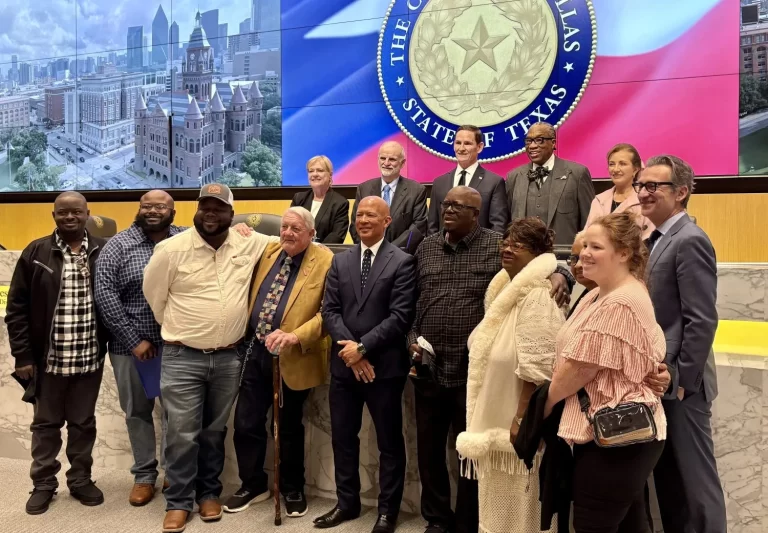
This week, that injustice was corrected in the Dallas County courtroom. “It is my duty to do everything I can to right the wrongs of the past,” emphasized John Creuzot, the district attorney. “Tommy Lee Walker’s rights were violated time and time again; the system failed him. The case was drenched in racial injustice,” Creuzot added.
This was evident in the courtroom: the former head of the Dallas Police was once a member of the Ku Klux Klan, and the former district attorney was responsible for at least 20 wrongful convictions. Both men have since passed away.
The court unanimously ruled that Walker was innocent and should never have been executed.
“Tommy Lee Walker was not killed; he was murdered.”
After the verdict, there was an emotional embrace between Walker’s son and Parker’s son. “I’m sorry for what happened,” was said from both sides.
“It was hard growing up without a father,” said Edward Lee Smith after the verdict. “When other kids talked about their dads at school, I had nothing to share. I’m 72 now, and I still miss my dad.”
Innocence Project
The fact that this case was reopened after so many decades is thanks to the Innocence Project. This organization is dedicated to overturning wrongful convictions. It was the first time the Innocence Project filed a request for someone who had already passed away.
The Innocence Project emphasizes that “structural racism” is still very present in legal cases. According to the organization, Black men are 7.5 times more likely to be wrongfully convicted.
Waterdicht alibi, maar toch geëxecuteerd:
70 jaar na zijn dood spreekt rechtbank Tommy Lee Walker vrij
We keren terug naar de avond van 30 september 1953. Aan een bushalte in de buurt van Dallas Love Field staat Venice Parker (31) na haar werk te wachten op haar bus. Maar ze zou nooit meer thuiskomen. De vrouw werd verkracht en neergestoken. Ze werd nog naar het ziekenhuis gebracht, maar overleed aan haar verwondingen. Volgens een (valse) verklaring van een agent vertelde Parker nog dat de dader een zwarte man was. Uit getuigenissen van omstaanders bleek dat ze dat niet gezegd kon hebben, omdat ze simpelweg te zwaargewond was om nog te praten.
Op het moment van de aanval liep de spanning in Dallas al een tijd hoog op. Er was sprake van een reeks aanrandingen, die in de pers werden toegeschreven aan een zwarte man. De politie stond dan ook onder grote druk om de zaak-Parker op te lossen. In de zoektocht naar de dader arresteerden agenten honderden zwarte mannen. Na een twijfelachtige tip werd Tommy Lee Walker opeens opgepakt voor de moord.
Nochtans had Walker een waterdicht alibi voor die avond: hij was namelijk bij zijn vriendin die net bevallen was. Dat werd ook bevestigd door 10 getuigen.
Zoontje 1 keer gezien
De politie loog echter dat er wél bewijs was en Walker werd gedwongen om (valselijk) te bekennen. Een witte jury veroordeelde hem in enkele uren tijd en 2 jaar later werd hij geëxecuteerd op de elektrische stoel. Hij was toen amper 21 jaar. Hij heeft zijn zoontje Edward Lee Smith slechts 1 keer mogen zien.
70 jaar na executie: vrijspraak voor Walker
In de rechtbank van Dallas County is die onrechtvaardigheid deze week rechtgezet. “Het is mijn plicht om alles in het werk te stellen om het onrecht uit het verleden recht te zetten”, benadrukte John Creuzot, de officier van justitie. “De rechten van Tommy Lee Walker zijn keer op keer geschonden, het systeem heeft hem in de steek gelaten. De zaak was doordrenkt met raciale onrechtvaardigheid”, klonk het nog bij Creuzot.
Dat bleek ook in de rechtbank: het toenmalige hoofd van de politie van Dallas was ooit lid van de Ku Klux Klan en de toenmalige openbare aanklager heeft maar liefst 20 onterechte veroordelingen op zijn conto. Beide mannen zijn intussen overleden.
Een rechtbank oordeelde dan ook unaniem dat Walker onschuldig was en nooit had mogen geëxecuteerd worden.
“Tommy Lee Walker is niet gedood, hij is vermoord.”
Na de uitspraak kwam het tot een ontroerende omhelzing tussen de zoon van Walker en de zoon van Parker. “Het spijt me wat er gebeurd is”, klonk het langs beide kanten.
“Het was moeilijk om op te groeien zonder vader”, vertelde Edward Lee Smith na de uitspraak. “Als andere kinderen het op school hadden over hun vader, had ik niets te vertellen. Ik ben 72 jaar en mis mijn papa nog altijd.”
Innocence Project
Dat de zaken zovele tientallen jaren opnieuw voor een rechtbank komt, is het werk van het Innocence Project. Die organisatie zet zich in om onterechte veroordelingen terug te draaien. Het was de eerste keer dat het Innocence Project een aanvraag indiende voor iemand die overleden is.
Het Innocence Project benadrukt dat “structureel racisme” nog altijd heel aanwezig is in rechtszaken, volgens de organisatie is de kans maar liefst 7,5 keer groter dat een zwarte man onterecht veroordeeld wordt.
The Ballad of Tommy Lee Walker
6 mei 2025
Provided to YouTube by DistroKid
The Ballad of Tommy Lee Walker · Joe Darcy & The New Disease · Joe Darcy & The New Disease · Greg Robert Parker
The Ballad of Tommy Lee Walker
℗ Natwood
Released on: 2025-05-07
Auto-generated by YouTube.
Son of wrongly executed Dallas man finds peace 70 years with father’s exoneration
22 jan 2026
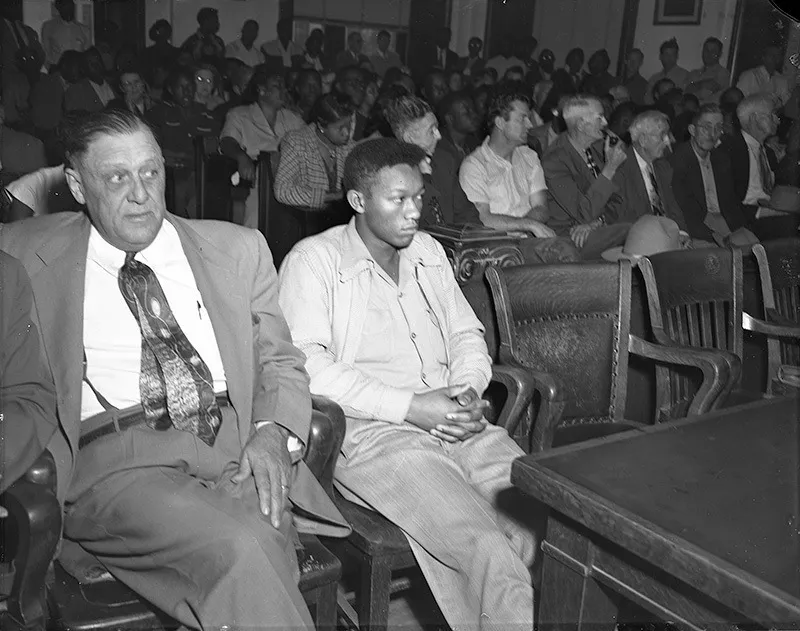
Tommy Lee Walker’s son, Ted Smith, watched film footage of his father’s haunting stare, recorded on the day he was sentenced to death after pleading his innocence to a judge. It was all too much for his son.
“I’m 72 years old, and I still miss my daddy,” said Smith. He broke down talking about the father he barely remembers.
Dallas man, Tommy Lee Walker, exonerated in 1954 murder case
“I have been tricked out of my life”: Dallas man wrongfully executed 70 years ago to be exonerated
Black man executed in Texas cleared of any wrongdoing years later
Dallas officials exonerate man wrongfully executed 70 years ago
Essential viewing
Must-Listen Video
The trial took national attention
5000 people attended Walker’s funeral
Executed at 21, Declared Innocent 70 Years Later | The Tragedy of Tommy Lee Walker
24 jan 2026
In the 1950s American South, justice was not blind — it was segregated.
This video tells the tragic and powerful story of Tommy Lee Walker, a 19-year-old Black man who was executed in Texas in 1956 for a crime he did not commit, and exonerated more than 70 years later.
Set against the backdrop of Jim Crow laws, racial segregation, and a deeply flawed judicial system, Walker’s case exposes how fear, racism, and pressure to quickly solve crimes often led to wrongful convictions — especially when Black men were accused of crimes against white victims.
With no physical evidence, coerced confessions, an all-white jury, and an underfunded defense, Tommy Lee Walker’s trial reflected a system built to convict, not to seek truth. His execution became just another statistic — until modern investigators reopened the case decades later and uncovered a devastating miscarriage of justice.
This is not just a story about the past.
It is a warning about what happens when prejudice replaces evidence, and when justice values speed over truth.
▶️ Watch to understand:
How racial segregation influenced arrests and trials in the 1950s
The historical roots of Southern racism dating back to slavery
Why Black defendants faced near-certain conviction
How the justice system failed both the accused and the victim’s family
And why Tommy Lee Walker’s exoneration still matters today
If stories of wrongful convictions, racial injustice, and true crime history matter to you, don’t forget to like, comment, and subscribe for more in-depth documentaries.
Justice delayed may come too late — but truth still matters.
Essential viewing
Must-Listen Video

Tommy Lee Walker, the Black Dallas Man Executed for 1954 Murder, Declared Innocent
4 Justice Delayed: The Unanswered Questions of Executions in 1944 and the 1950s
Family seeks justice 70 years after execution
✨ The Struggle for Justice: The Innocence of 14-Year-Old George Stinney
This video highlights the case of George Stinney, a young boy executed in 1944 for a crime his family insists he didn’t commit. The segment explores the family’s ongoing fight for justice, as they maintain his innocence decades after the execution.
✨ De Strijd voor Gerechtigheid: De Onschuld van de 14-jarige George Stinney
Deze video belicht de zaak van George Stinney, een jonge jongen die in 1944 werd geëxecuteerd voor een misdaad waarvan zijn familie volhoudt dat hij die niet beging. Het fragment onderzoekt de voortdurende strijd van de familie voor gerechtigheid, terwijl zij zijn onschuld bepleiten, decennia na de executie.
5 Candid Camera Classic: The Mystery of the Zero-Cent Stamps
Candid Camera Classic: Zero Cent Stamps!
21 sep 2025
Chris sells postal customers 0-cent stamps. (2002)
Peter’s new book is about fantasy football. It’s not a how-to guide, it’s the inside story about experts, big winners, celebrities, pioneers and more.