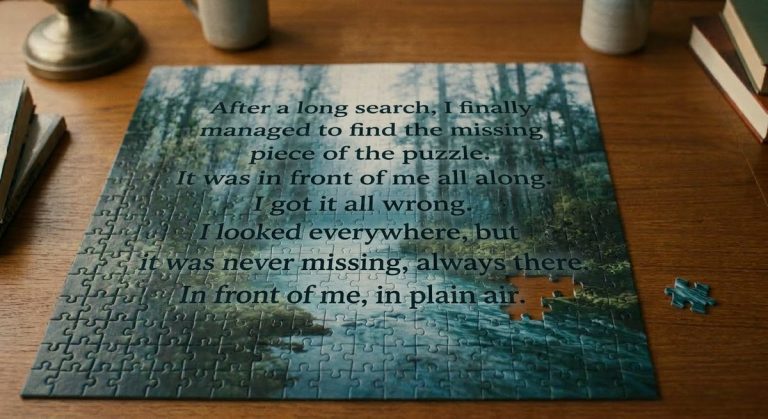
After a long search, I finally managed to find the missing piece of the puzzle.
It was in front of me all along.
I got it all wrong. I looked everywhere.
Page Description
Explore the overlooked flaws in the justice system, revealing the hidden truths that remain out of sight, & how these flaws impact fairness & accountability
Justice is often heralded as a pillar of fairness, but beneath its surface lies a set of hidden flaws that many are unaware of. These concealed issues are not just minor oversights—they are systemic failures that distort the very principles justice should uphold.
In this page, we explore the missing piece in the puzzle of justice, shining a light on the hidden flaws that continue to undermine trust and accountability in legal systems worldwide.
By examining these overlooked truths, we begin to understand how they shape the lives of individuals and society as a whole.
Het ontbrekende stukje van de puzzel:
de verborgen tekortkomingen van het rechtssysteem
Rechtvaardigheid wordt vaak geprezen als een fundament van eerlijkheid, maar onder het oppervlak schuilen verborgen gebreken die velen onbekend zijn. Deze verborgen problemen zijn niet slechts kleine vergissingen—ze zijn systematische tekortkomingen die de principes die het recht zou moeten handhaven, ondermijnen.
Op deze pagina verkennen we het ontbrekende stuk in de puzzel van de rechtspraak, waarbij we de verborgen gebreken belichten die het vertrouwen en de verantwoordelijkheid in rechtsystemen wereldwijd blijven ondermijnen.
Door deze over het hoofd geziene waarheden te onderzoeken, beginnen we te begrijpen hoe ze de levens van individuen en de samenleving als geheel beïnvloeden.
Inside Elite Institutions: Harvard, Eton, and the World of Boarding Schools
Children and Teenagers Growing Up Cut Off from the World
In these videos, we explore the rarefied world of elite institutions where children and teenagers grow up separated from the realities of the outside world. From the prestigious halls of Harvard to the centuries-old traditions of Eton College, these young individuals are raised in environments that shield them from common life, shaping their perspectives and futures in ways few can understand. These are worlds where privilege, tradition, and isolation intersect.
Kinderen en Tieners die Opgroeien in een Aparte Wereld.
In deze video’s verkennen we de zeldzame wereld van elite-instellingen waar kinderen en tieners opgroeien, afgescheiden van de realiteit van de buitenwereld. Van de prestigieuze hallen van Harvard tot de eeuwenoude tradities van Eton College, deze jonge individuen worden opgevoed in omgevingen die hen afschermen van het gewone leven, waardoor hun perspectieven en toekomst op manieren worden gevormd die weinigen kunnen begrijpen. Dit zijn werelden waar privilege, traditie en isolatie samenkomen.
Harvard’s RICHEST Students #harvard #college
Eton College Documentary (1991) Part 1 of 2
Eton College Documentary (1991) Part 2 of 2
Mohamad at Eton: From Refugee Camp to UK Boarding School | REWIND
20 apr 2018
Almost a decade ago, Al Jazeera’s Witness series followed 16-year-old Palestinian refugee Mohamad Fahed on a scholarship to Britain’s most prestigious private school, Eton College.
Thanks to an all-expenses-paid scholarship he was looking forward to spending two years in an environment that is largely unfamiliar even to average British students.
Mohamad was a thoughtful boy whose life so far has been spent in the Rashidiya refugee camp in southern Lebanon. He dreamed of becoming an engineer, but as the second generation of his family to be born in exile, access to further education and jobs were limited.
But then he won the Horizon Scholarship to Eton, which opened up his life in ways he could not have imagined.
This moving film followed Mohamad through his first year at this extraordinary school – going through homesickness; taking advantage of extra-curricular activities like sport and music; participating in some of Eton’s eccentric annual events, and most important of all, knuckling down to the rigorous educational timetable.
Mohamad had to find ways to adapt to life in a boarding school and Eton’s Christian framework with chapel attendance compulsory.
Eight years on, REWIND catches up with Mohamad, who has now realised his dream and is working as an engineer with a large company in the UK, and he tells of his achievements – and his hopes for his, and Palestine’s, future.
Al Jazeera: You graduated from Eton in 2012. What has happened since?
Mohamad: I was very fortunate to have been awarded another scholarship by the Horizon Foundation to continue my studies at UCL in London. I was awarded a job offer in London at a global engineering consultancy called Mott MacDonald where I have been working for more than a year now.
Al Jazeera: What sort of projects are you working on there?
Mohamad: I’ve mainly been working on two projects; the first one is a road expansion in the US. After that, I started working on a huge scheme in London called Cross Rail II and the aim is to build a new railway that connects South West London with North East London.
Al Jazeera: Do you have any plans of going back to Lebanon, or even to Palestine?
Mohamad: The reality is right now, as a Palestinian, I am deprived of the right to return to Palestine because of the Israeli occupation. The United Nations has reaffirmed our right as Palestinians to go back to our home countries.
Every single year since 1948, since my grandparents were kicked out, the UN resolution 194 affirmed our right to go back but we’ve never been allowed to go. My grandmother, who was featured in this documentary, passed away two years ago without achieving her dream of going back.
In terms of going back to Lebanon – I love Lebanon because my parents are there. I miss them, they miss me. The problem is that as Palestinians in Lebanon, we’re deprived of many civil rights. We are not allowed to work in more than 20 professions. Me, as a civil engineer, I wouldn’t be able to practise in Lebanon. Many of my friends who have graduated from university have gone back to Lebanon, and at the moment are still unemployed.
Al Jazeera: So where is home for you? How does your family feel now that this has been more of a one-way journey for you?
Mohamad: My dream is to be back in Palestine. The ultimate goal of a home is Palestine.
At the same time, I still have my childhood memories of Lebanon. I love Lebanon because I grew up there and my family is there.
The UK, on the other hand, has provided me with life-changing opportunities. I spent the formative years of my life here, I made many friends, I made work connections, so I will always have a connection. Home will always continue to be, in the back of my mind, Palestine.
Living Like Harry Potter – A Day At Boarding School
15 jan 2022 #HarryPotter #UK #DWEuromaxx
Tradition meets modernity at Sherborne boarding school in Great Britain – almost reminiscent of Hogwarts, the wizarding school in the Harry Potter stories.
It’s not just any school, either; even actor Jeremy Irons and singer Chris Martin went to there. We follow Max, who – like his siblings – lives at Sherborne, one of the country’s more renowned boarding schools.
Founded in 1550, it’s one of the oldest of its kind in Great Britain. Some 600 boys between the ages of 13 and 18 study here. 16-year-old Max lets us experience a day with him, with everything that’s comes with boarding school life.
When Justice Is Detached: The Flaws of an Ivory Tower System
Paleis, pers en politie keken weg in zaak-Andrew | Lia van Bekhoven | Buitenhof
The page explores the concept that justice, when detached from accountability, can be manipulated or ignored by powerful institutions, much like how the palace, press, and police turned a blind eye in the case of Andrew, as discussed by Lia van Beckhoven. It delves into how justice, in certain instances, operates in an isolated “ivory tower,” disconnected from the reality of the people it is meant to serve. This section will expose how powerful figures and institutions overlook or suppress crucial truths, leaving the public vulnerable to wrongful convictions, injustice, and systemic flaws.
Wanneer Rechtspraak losstaat van de werkelijkheid: de Tekortkomingen van een Ivoren-Torensysteem
Deze pagina verkent het concept dat rechtvaardigheid, wanneer het losstaat van verantwoording, gemanipuleerd of genegeerd kan worden door machtige instellingen, zoals bleek toen het paleis, de pers en de politie wegkeken in de zaak van Andrew, zoals Lia van Beckhoven besprak. Het gaat in op hoe rechtspraak, in bepaalde gevallen, opereert in een geïsoleerde “ivoren toren”, los van de werkelijkheid van de mensen die het zou moeten dienen. Dit deel onthult hoe machtige figuren en instellingen cruciale waarheden over het hoofd zien of onderdrukken, waardoor het publiek kwetsbaar wordt voor onterechte veroordelingen, onrecht en systematische gebreken.

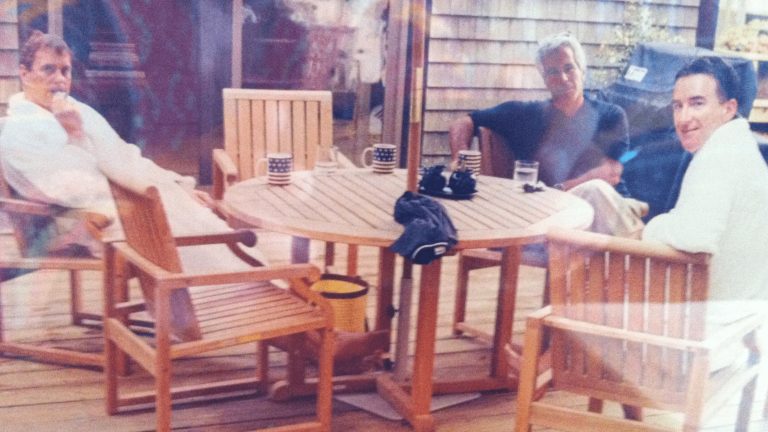
‘Remarkably intimate’, First image emerges of Andrew, Mandelson and Epstein together
When Responsibility is Abandoned: The Breakdown of Justice
When someone in a position of responsibility, like a lawyer or public official, knowingly allows wrongdoings to continue or hides information that could help right a wrong, it speaks volumes about their integrity—or lack thereof. It’s one thing to make a mistake or miss something in the moment, but to actively withhold the truth or ignore it because of convenience, power, or self-interest crosses a moral line.
In legal circles, there’s a professional and ethical duty to uphold justice, and it’s heartbreaking when that duty is disregarded. It makes you question how individuals justify such behavior to themselves. They might rationalize it through fear, career advancement, or even being caught up in a larger system that values conformity over truth.
The whole situation gets murky when people involved start to protect their own interests, or when the system itself is flawed to the point where the truth becomes inconvenient. But at the end of the day, those who are aware of wrongdoings and don’t act—whether out of fear or complacency—fail in their duty to society. It’s not just a failure of the system but a failure of character.
The broader narrative from this is where there is a distinguish between a court system failure due to mistakes versus one that’s fundamentally flawed. The abandonment of responsibility ties into the idea that individuals within the system (like judges, lawyers, or public officials) play a role in either upholding or destroying the system’s integrity.
Verzaken aan Verantwoordelijkheid: het Falen van het Rechtssysteem
Wanneer iemand in een verantwoordelijke positie, zoals een advocaat of een overheidsfunctionaris, opzettelijk toestaat dat wangedrag doorgaat of informatie verbergt die zou kunnen helpen om een onrecht te herstellen, zegt dit veel over hun integriteit – of het gebrek daaraan. Het is iets anders om een fout te maken of iets te missen op het moment zelf, maar om actief de waarheid achter te houden of te negeren omwille van gemak, macht of eigenbelang, gaat over een morele grens.
In juridische kringen bestaat er een professionele en ethische plicht om gerechtigheid te handhaven, en het is hartverscheurend wanneer die plicht wordt genegeerd. Het doet je afvragen hoe individuen dergelijk gedrag voor zichzelf rechtvaardigen. Ze rationaliseren het misschien uit angst, carrièrevoordeel, of zelfs doordat ze verstrikt raken in een groter systeem dat conformiteit boven waarheid stelt.
De situatie wordt nog vager wanneer de betrokkenen beginnen hun eigen belangen te beschermen, of wanneer het systeem zelf zo gebrekkig is dat de waarheid ongemakkelijk wordt. Maar uiteindelijk zijn degenen die op de hoogte zijn van wangedrag en niet handelen – of het nu uit angst of zelfgenoegzaamheid is – tekortgeschoten in hun plicht tegenover de samenleving. Het is niet alleen een falen van het systeem, maar een falen van karakter.
Het bredere verhaal maakt onderscheid tussen een rechtsstelsel dat faalt door fouten en een dat fundamenteel gebrekkig is. Het afstoten van verantwoordelijkheid hangt samen met het idee dat individuen binnen het systeem (zoals rechters, advocaten of openbare functionarissen) een rol spelen in het al dan niet handhaven of vernietigen van de integriteit van het systeem.
The Legal System Must Recognize its Limits when the Evidence does not Support the Charges
When the legal system is meant to protect and uphold justice, it becomes a travesty when it is used to harm the very people it was created to protect. This is particularly evident when an innocent person is subjected to the full force of the law, despite the lack of any credible evidence or the very essence of who they are being in complete contradiction to the charges against them. In such cases, the legal process doesn’t just fail to serve its purpose—it becomes a tool of oppression, an engine that inflicts unnecessary suffering on someone who should never have been in its path.
The tragedy of this is best exemplified in the story of Tracy Felstead, a young woman who, at just 19 years old, found herself caught in a nightmare that she could neither understand nor defend herself against. Imprisoned and powerless, Tracy’s story is not just about a false allegation; it is about a complete misalignment between the charges and the person she truly was. The entire apparatus of the legal system was set in motion against her, despite it being entirely unnecessary.
When the legal system operates in this way—without regard for the truth, without any concern for the person at the center of it—it ceases to be about justice. It becomes about something else entirely: a mechanism of control, a force that destroys lives instead of protecting them. In cases like Tracy’s, we no longer see justice at play. We see a system that has lost its way, where the idea of justice is not just distant—it is irrelevant.
When justice fails to recognize its limits and continues to perpetuate harm for no reason, it is no longer a concept we can recognize as serving the common good. It becomes an illusion, something hollow that no longer has the power to heal or protect. And in the face of such a system, we are left questioning: how can we call it justice when it is so clearly a force for harm?
When the court system fails due to fraudulent structures or unjust accusations, it isn’t just about honest mistakes—it’s about how the system itself can be manipulated to do harm. Tracy’s story illustrates how injustice becomes entrenched when those in power don’t recognize the limits of the legal system and instead use it to perpetuate harm.
In this context, the unthinkable court process we discussed earlier is reflected in how the system can continue even when it doesn’t serve justice—it becomes a tool of control, not protection.
Hoewel het rechtssysteem bedoeld is om gerechtigheid te beschermen en te handhaven, wordt het een schijnvertoning wanneer het wordt gebruikt om juist die mensen schade te berokkenen die het had moeten beschermen.
Dit wordt bijzonder duidelijk wanneer een onschuldig persoon wordt blootgesteld aan de volledige kracht van de wet, ondanks het ontbreken van enig geloofwaardig bewijs, of wanneer de essentie van wie zij zijn, volledig in strijd is met de aanklachten tegen hen. In dergelijke gevallen schiet het juridische proces niet alleen tekort in het vervullen van zijn doel, maar wordt het een instrument van onderdrukking, een machine die onnodig leed toebrengt aan iemand die daar niet voor in aanmerking komt.
De tragedie hiervan wordt het duidelijkst geïllustreerd in het verhaal van Tracy Felstead, een jonge vrouw die, op slechts 19 jarige leeftijd, gevangen kwam te zitten in een nachtmerrie die ze noch begreep, noch zich tegen kon verdedigen. Gevangen en machteloos, is het verhaal van Tracy niet alleen een kwestie van een valse beschuldiging; het gaat over een volledige misalignering tussen de aanklachten en de persoon die zij werkelijk was. Het volledige apparaat van het rechtssysteem werd tegen haar ingezet, terwijl dit volledig onnodig was.
Wanneer het rechtssysteem op deze manier werkt—zonder oog voor de waarheid, zonder enige zorg voor de persoon die in het centrum staat—verliest het niet alleen zijn doel, het wordt een instrument van schade, een kracht die levens vernietigt in plaats van ze te beschermen. In gevallen zoals van Tracy, zien we niet langer gerechtigheid in actie. We zien een systeem dat zijn weg kwijt is, waarbij het idee van gerechtigheid niet alleen ver weg is, maar volledig irrelevant wordt.
Wanneer gerechtigheid niet in staat is om zijn grenzen te herkennen en blijft voortbestaan in het toebrengen van schade zonder reden, is het niet langer een concept dat we kunnen herkennen als iets dat het algemeen belang dient. Het wordt een illusie, iets hol dat geen kracht meer heeft om te genezen of te beschermen. En tegenover zo’n systeem blijven we met de vraag zitten: hoe kunnen we het gerechtigheid noemen wanneer het duidelijk een kracht voor schade is?
Wanneer het rechtssysteem faalt door frauduleuze structuren of onterechte beschuldigingen, gaat het niet alleen om eerlijke fouten – het gaat erom hoe het systeem zelf gemanipuleerd kan worden om schade aan te richten. Het verhaal van Tracy illustreert hoe onrecht verankerd raakt wanneer degenen in macht de grenzen van het rechtssysteem niet erkennen en het in plaats daarvan gebruiken om schade te blijven veroorzaken.
In dit verband wordt het ondenkbare rechtsproces dat we eerder bespraken weerspiegeld in hoe het systeem kan doorgaan, zelfs wanneer het geen recht doet – het wordt een instrument van controle, geen bescherming.
The Hidden Cost of Justice: Flowers for a Ghost
Casualties of War (1989) – Flowers for a ghost
6 mei 2014
Casualties of War is a movie directed by Brian De Palma, based on a true story of The Incident on Hill 192 ( book by Daniel Lang) during the Vietnam War.
Starring: Michael J Fox, Sean Penn, Thuy Thu Le
Song: Flowers for a ghost
Artist: Thriving Ivory
I do not own the movies and the song. Just edited.
In this haunting scene from Casualties of War, we witness the devastating consequences of unchecked power and the failure of justice. “Flowers for a Ghost” serves as a stark reminder of the human cost when those in authority are allowed to act without accountability, mirroring the hidden flaws we often fail to acknowledge in our own systems of justice.
A clip barely a minute and 50 seconds long confronts us with the essence of the book Nobody’s Girl. It depicts the life of Virginia Roberts Giuffre, particularly for those who have read the book thoroughly.
De verborgen kosten van gerechtigheid: Bloemen voor een geest
In deze aangrijpende scène uit Casualties of War zien we de verwoestende gevolgen van onbeperkte macht en de mislukking van gerechtigheid. “Flowers for a Ghost” is een schrijnende herinnering aan de menselijke kosten wanneer degenen in macht zonder verantwoording kunnen handelen, wat de verborgen gebreken weerspiegelt die we vaak over het hoofd zien in onze eigen rechtssystemen.
Een clip van nog geen minuut en vijftig seconden confronteert ons met de essentie van het boek Nobody’s Girl. Het toont het leven van Virginia Roberts Giuffre, vooral voor degenen die het boek grondig hebben gelezen.
A Twist on Justice: Candid Camera’s Take on Personal Accountability
Candid Camera Classic: Buy Your Own Shoes
In this classic Candid Camera segment, Dick hilariously plays a shoe salesman, turning the tables by selling people their own shoes. A lighthearted yet thought-provoking take on accountability and fairness, echoing the often unexpected twists in the pursuit of justice.
What we see with various clients is a scenario similar to how a lawyer might create a false impression for a jury or judge, or how manipulation works in general (such as phishing or fraud). The more astute clients saw through the situation.
Een Andere Kijk op Justitie: Candid Camera’s Kijk op Persoonlijke Verantwoordelijkheid
In dit klassieke Candid Camera-fragment speelt Dick op humoristische wijze een schoenenverkoper die mensen hun eigen schoenen verkoopt. Een luchtige, maar doordachte kijk op verantwoordelijkheid en rechtvaardigheid, die de vaak onverwachte wendingen weerspiegelt in de zoektocht naar gerechtigheid.
Wat we bij verschillende cliënten zien, is een scenario dat doet denken aan hoe een advocaat een valse indruk kan creëren voor een jury of rechter, of hoe manipulatie in het algemeen plaatsvindt (zoals phishing of fraude). De meer oplettende cliënten doorzagen de situatie.